ProBors vs Signal8.ai: Congress & Whale Trade Tracker
ProBors vs Signal8.ai: Congress and Whale Trade Tracking
Nancy Pelosi bought $5 million in Nvidia calls before a major AI infrastructure bill hit the floor. You found out three weeks later from a Twitter screenshot. By then, the setup was gone, the premium was cooked, and you were left wondering why retail always gets the news last.
That's the game. Politicians, insiders, and institutions move first. Retail finds out when someone bothers to parse a PDF buried on a .gov site. But in 2026, a new category of tools is flipping that script: congress stock trading trackers, insider trading trackers, and whale trade trackers that parse STOCK Act disclosures, 13F filings, and institutional flows in real time — and surface them before the move is over.
Two names keep showing up in trader Discord channels and Reddit threads: ProBors and Signal8.ai. Both promise to track politician stock trades, institutional 13F holdings, and whale activity. Both claim to cut the noise and deliver alpha. But they're built differently, priced differently, and serve different types of traders.
This is ProBors vs Signal8.ai — the breakdown for swing traders and retail investors who want to know which congress and whale trade tracker actually fits their research process before they subscribe.
Key Takeaways
- ProBors offers lifetime AppSumo deals for one-time payment access to congress trade tracking, while Signal8.ai runs on recurring subscription tiers with broader institutional data coverage
- Signal8.ai includes MCP stock data connector integration for AI-powered research workflows, making it more developer-friendly and automation-ready
- ProBors focuses heavily on STOCK Act disclosure tracking and politician stock trades with a simpler, more accessible interface for casual retail investors
- Whale trade tracking and 13F institutional holdings are stronger on Signal8.ai, with deeper historical data and sector-level flow analysis
- Neither tool guarantees alpha — they surface data faster, but the edge comes from how you interpret and act on the information within your own trading system
What ProBors and Signal8.ai Actually Track (And Why It Matters)
Most traders think these tools just show you what Nancy Pelosi bought. That's the headline feature, but it's not the whole story. Both ProBors vs Signal8.ai pull from multiple data sources that retail investors historically couldn't access without expensive Bloomberg terminals or hours of manual PDF scraping.
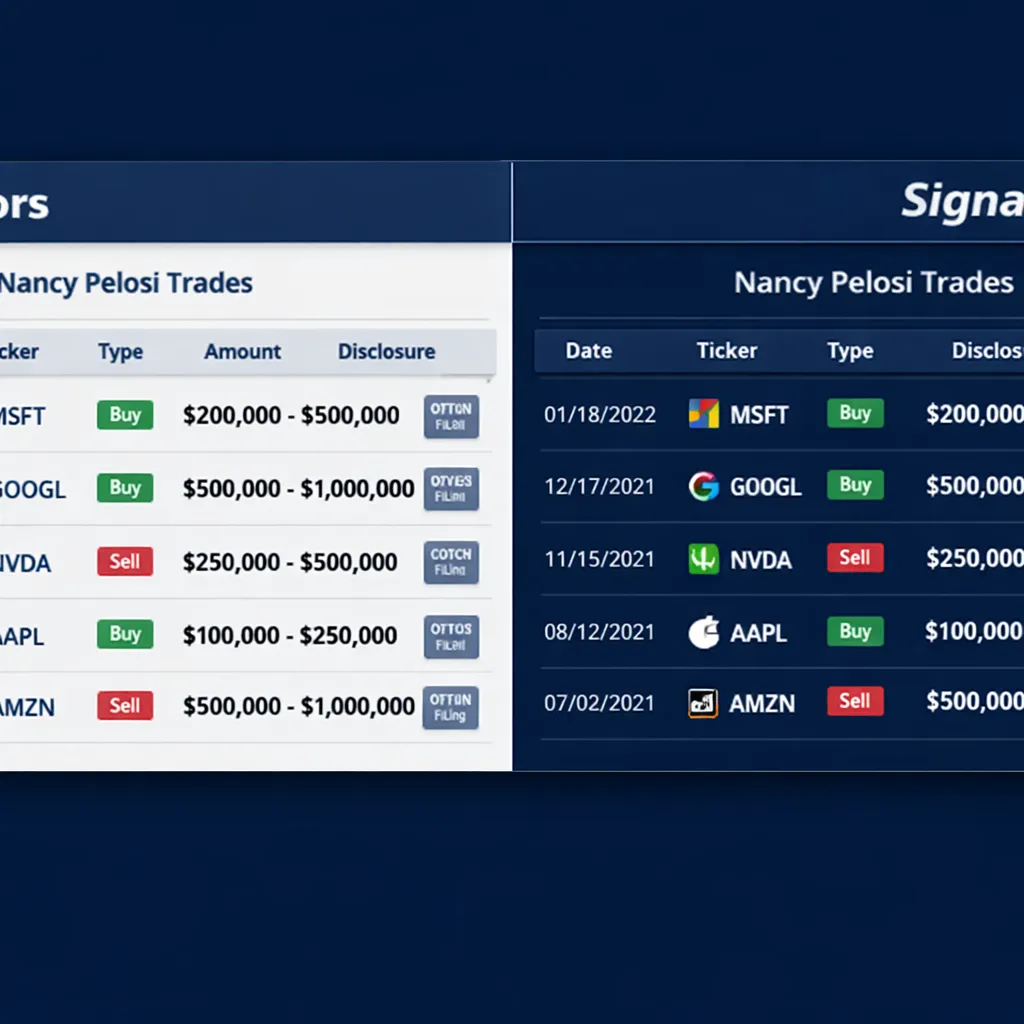
ProBors is a congress stock trading tracker first. It parses STOCK Act disclosures — the legally required filings politicians must submit within 45 days of a trade. It surfaces names, tickers, transaction dates, and estimated position sizes. The interface is clean, the filters are simple, and the focus is narrow: what did elected officials buy or sell, and when did they file the paperwork?
Signal8.ai casts a wider net. It's a whale trade tracker and institutional 13F holdings tracker that also includes congress trades. It pulls 13F filings (quarterly disclosures from funds managing over $100 million), unusual options activity, and large block trades that signal institutional positioning. The MCP stock data connector lets you pipe this data into AI research agents, custom dashboards, or automated alerts — making it more of an AI trading research tool than a simple tracker.
Here's the difference in practice: if you want to know what politicians are trading and you're willing to check manually a few times a week, ProBors does the job. If you're building a system that cross-references insider activity with institutional flows, sector rotation, and your own technical setups, Signal8.ai gives you the pipes to do it.
The edge isn't in knowing a politician bought a stock. The edge is in knowing when they bought it relative to support levels, earnings season, or sector momentum — and having a process to act on that confluence before the rest of retail catches up. For more on how AI tools are helping traders spot setups earlier, check out what swing traders are quietly using in 2026.
ProBors vs Signal8.ai: Feature Breakdown for Congress and Insider Trade Tracking
Let's get specific. Both tools track politician stock trades, but the depth, speed, and usability differ in ways that matter when you're trying to build a watchlist or validate a thesis.
ProBors is built for accessibility. The STOCK Act disclosure tracker updates as soon as filings hit the House and Senate databases. You get a feed of recent trades, filterable by politician, ticker, transaction type (buy/sell/option), and date range. The UI is straightforward — no learning curve, no API docs to read. You log in, you see the trades, you add tickers to your watchlist. It's the best congress trade tracker 2026 for retail investors who just want the data without the complexity.
The downside? ProBors doesn't contextualize the data. It shows you what was traded, but not why it might matter. There's no integration with price action, no sector heatmaps, no historical win rate on that politician's past trades. You're getting raw disclosure data, which is valuable — but you're doing the analysis yourself.
Signal8.ai takes a different approach. It tracks congress trades, but it also layers in insider trading tracker data (Form 4 filings from corporate insiders), 13F institutional holdings, and whale-sized block trades. The platform flags unusual activity — like when multiple insiders at the same company sell in the same week, or when a politician's trade aligns with a hedge fund's new position in the same sector.
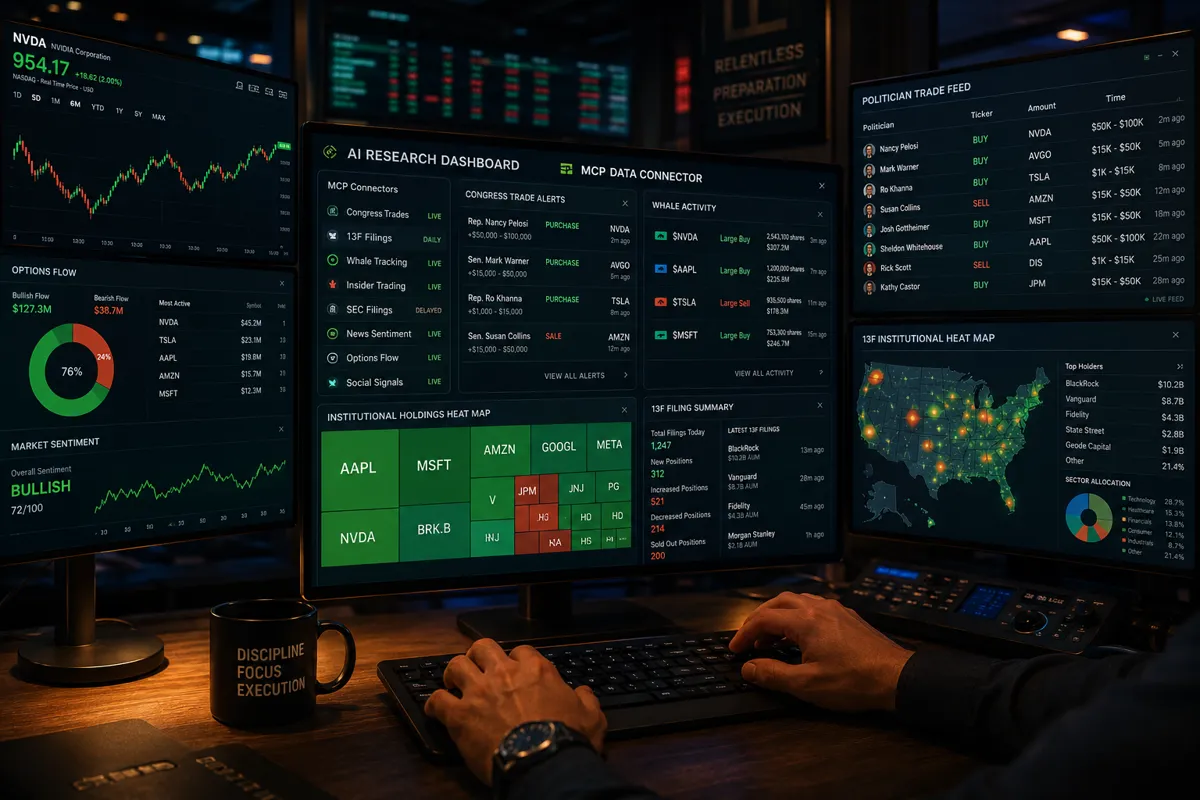
The MCP stock data connector is where Signal8.ai separates itself. MCP (Model Context Protocol) lets you pull Signal8.ai's data into AI agents, custom scripts, or third-party research tools. If you're running a system that cross-references multiple data sources — say, congress trades + unusual options flow + technical breakouts — Signal8.ai gives you the infrastructure to automate that. ProBors doesn't.
Here's the trade-off: Signal8.ai has more features, but it also has more friction. The interface is denser, the learning curve is steeper, and the pricing reflects the complexity. ProBors is plug-and-play. Signal8.ai is build-your-own-research-stack.
If you're comparing tools and want to see how other AI stock research platforms stack up, the landscape in 2026 is crowded — but only a few actually deliver signal over noise.
Pricing: ProBors AppSumo Lifetime Deal vs Signal8.ai Subscription Tiers
This is where ProBors vs Signal8.ai gets interesting. The pricing models are fundamentally different, and the right choice depends on how you think about tool costs and how long you plan to use the platform.
ProBors is available through AppSumo as a lifetime deal. You pay once — typically between $49 and $99 depending on the tier and any active promotions — and you own access forever. No recurring charges, no annual renewals, no surprise price hikes. For retail traders who are tired of subscription fatigue, this is a clean value proposition. You get the congress stock trading tracker, unlimited access to STOCK Act filings, and basic filtering tools. The ProBors AppSumo review threads on Reddit are mostly positive, with users praising the simplicity and the one-time cost structure.
The catch? Lifetime deals are great until the company stops updating the product or pivots to a new model. AppSumo tools sometimes get abandoned or moved to a "legacy" tier with limited support. ProBors is still actively maintained as of 2026, but it's worth noting that you're betting on the longevity of a smaller platform.
Signal8.ai pricing runs on a subscription model. Plans start around $29/month for basic congress and insider tracking, with higher tiers ($79–$149/month) unlocking institutional 13F data, whale trade alerts, API access, and the MCP connector. Annual plans offer a discount, but you're still looking at $300–$1,500/year depending on the feature set.
For traders who use the data daily and integrate it into a broader research system, the subscription makes sense. You're paying for ongoing updates, deeper data coverage, and infrastructure (API, webhooks, MCP) that ProBors doesn't offer. For casual investors who check politician trades a few times a month, the recurring cost is harder to justify.
Here's the math: if you use Signal8.ai for two years at $79/month, you've spent $1,896. ProBors costs $99 once. But if Signal8.ai's institutional data helps you catch one whale-driven sector rotation that ProBors wouldn't have flagged, the ROI flips. The question isn't which is cheaper — it's which fits your process and frequency of use.
If you're evaluating multiple tools and want to see how AI trading platforms compare across pricing and features, the directory at FullStack Alpha breaks down over 100 options by use case, cost, and trader type.
Whale Trade Tracking and Institutional 13F Holdings: Where Signal8.ai Pulls Ahead
Congress trades get the headlines, but whale trade tracking and institutional 13F holdings are where the real money moves. Politicians file disclosures weeks after the trade. Hedge funds file 13Fs up to 45 days after the quarter ends. But when you cross-reference multiple filings, sector flows, and unusual block trades, patterns emerge — and those patterns often precede the next leg of a move.
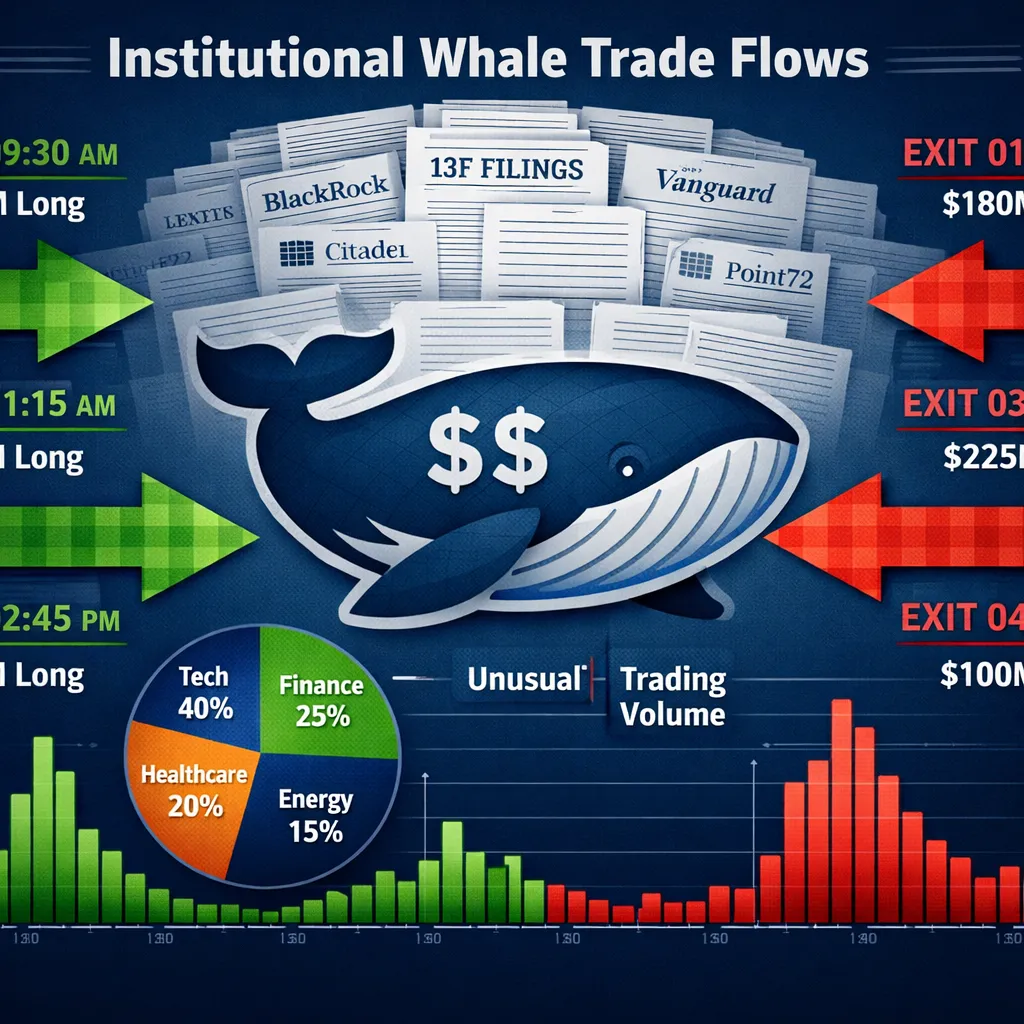
Signal8.ai is built for this. The platform aggregates 13F filings from thousands of institutional investors, flags new positions and exits, and highlights concentration changes (when a fund significantly increases or decreases a holding). You can filter by fund size, sector, or specific tickers to see which institutions are piling into a name or quietly rotating out.
The whale trade tracker layer adds real-time block trade data — large orders that move through dark pools or print on the tape after hours. When a $10 million block of a mid-cap stock trades in a single print, that's not retail. Signal8.ai surfaces those prints, timestamps them, and lets you set alerts for tickers on your watchlist.
ProBors doesn't do this. It tracks congress trades and that's it. No 13F data, no block trade alerts, no institutional flow analysis. If your edge is purely in following politician disclosures, that's fine. But if you're trying to build a thesis around sector rotation or institutional positioning, ProBors leaves you blind to half the picture.
Here's a real-world example: in early 2026, multiple senators filed disclosures showing purchases in defense contractors. Signal8.ai users also saw that three large hedge funds had increased their defense sector allocations in the prior quarter's 13Fs, and unusual call volume was hitting Lockheed and Northrop. ProBors users saw the senator trades. Signal8.ai users saw the confluence — and had a cleaner setup to trade.
The lesson: congress trades are a data point, not a strategy. The alpha comes from layering that data with institutional flows, technical setups, and your own risk management. Signal8.ai gives you the infrastructure to do that. ProBors gives you one piece of the puzzle.
For traders looking to understand how AI tools are surfacing setups before the crowd, the difference between a single data feed and a multi-source research stack is the difference between reacting and anticipating.
MCP Stock Data Connector and AI Integration: Signal8.ai's Developer Edge
Most retail traders won't care about this section. But if you're building a custom research system, running AI agents, or automating alerts across multiple data sources, the MCP stock data connector is why Signal8.ai exists in a different category than ProBors.
MCP (Model Context Protocol) is an open standard that lets AI models and research tools pull structured data from external sources. Signal8.ai's MCP connector means you can pipe congress trades, 13F filings, and whale activity directly into tools like ChatGPT, Claude, or custom Python scripts. You can ask an AI agent, "Show me all defense stocks where a senator bought in the last 30 days and a top-10 hedge fund increased their position in Q4," and the agent pulls the data in real time.
This is not a feature for beginners. But for traders who are comfortable with APIs, webhooks, or no-code automation platforms like Zapier or Make, it's a force multiplier. You can set up automated alerts that cross-reference multiple signals — say, a politician trade + a 13F filing + a technical breakout — and only get notified when all three align. That's the kind of system that cuts noise and keeps alpha.
ProBors has no API, no MCP connector, and no automation layer. It's a web app you log into manually. That's fine for most retail investors, but it means you're limited to the interface the company built. You can't customize it, you can't pipe the data elsewhere, and you can't build a multi-source research workflow around it.
The trade-off is simplicity. ProBors is easier to use because it does less. Signal8.ai is more powerful because it's more complex. If you're not building a custom system, the MCP connector is irrelevant. If you are, it's the reason to choose Signal8.ai over every other AI trading research tool comparison on the market.
For traders who want to understand how AI is changing the research process, the shift isn't just about better data — it's about automating the boring parts so you can focus on the decision.
Which Tool Fits Your Trading Process: ProBors vs Signal8.ai Decision Framework
Here's the part where most comparison articles hedge into mush. Not here. If you're a retail swing trader who checks politician trades a few times a week and wants a simple, low-cost tool, ProBors is the better choice. If you're building a research system that layers congress trades with institutional flows, whale activity, and technical setups, Signal8.ai is worth the subscription.
Choose ProBors if:
- You want a one-time payment with no recurring costs
- Your primary interest is tracking Nancy Pelosi stock trades and other high-profile politician disclosures
- You prefer a simple, no-learning-curve interface
- You're not integrating the data with other tools or building custom alerts
- You check the data manually and don't need real-time notifications
Choose Signal8.ai if:
- You want institutional 13F holdings tracker data and whale trade alerts in addition to congress trades
- You're comfortable with a subscription model and use the data frequently enough to justify the cost
- You want API access, MCP integration, or the ability to automate alerts and cross-reference multiple data sources
- You're building a research process that layers multiple signals (insider activity + institutional flows + technical setups)
- You value depth and customization over simplicity
Neither tool is a magic bullet. Both surface data faster than you'd get it manually, but the edge comes from how you use the data within your own system. A politician buying a stock doesn't mean you should. It means you add the ticker to your watchlist, check the chart, confirm the setup, size the position appropriately, and set a stop loss. The tool gives you the signal. You still have to read the tape.
For traders who want to see how other AI stock tools compare across use cases, the FullStack Alpha directory breaks down scanners, research platforms, and trackers by feature set, pricing, and trader type.
Conclusion
ProBors vs Signal8.ai isn't a fight — it's a choice between two different philosophies. ProBors is a clean, affordable congress stock trading tracker for retail investors who want to follow politician disclosures without complexity or recurring costs. Signal8.ai is a deeper, more expensive AI trading research tool for traders who want to layer congress trades with institutional flows, whale activity, and custom automation.
The right tool depends on your process, your budget, and how you think about data. If you're just starting to track insider and congress trades, ProBors is the low-friction entry point. If you're building a research system that integrates multiple signals and you're comfortable with APIs and automation, Signal8.ai gives you the infrastructure to do it right.
But here's the truth neither tool will tell you: the data is only as good as the system you build around it. A politician buying a stock doesn't mean you should chase it. A whale trade doesn't mean the move is over. The edge comes from layering the signal with price action, risk management, and a repeatable process that keeps you disciplined when the noise gets loud.
Want the tools and setups behind this, without the hype? Start at aistockpickerapps.com.