AI Stock Trading: The Honest Guide for Retail Traders
Last updated: June 30, 2026
Quick Answer: AI stock trading uses machine learning and algorithmic models to scan markets, generate signals, and in some cases execute trades automatically. For retail traders in 2026, these tools are genuinely useful for cutting noise and improving process — but they don't predict the future, they don't replace risk management, and most of the "AI trading" products being sold online are closer to glorified screeners than actual intelligence. Used right, AI is a research multiplier. Used wrong, it's just a faster way to make the same bad decisions.
Key Takeaways
- AI stock trading tools help with screening, signal generation, and pattern recognition — not guaranteed outcomes.
- No AI system predicts stock market movements with consistent accuracy. Anyone claiming otherwise is selling something.
- You can start using free AI trading tools with accounts as small as a few hundred dollars, but account size isn't the real barrier — process is.
- The biggest risk isn't the AI. It's the trader who turns off their brain and follows signals without a plan.
- AI trading bots work best in trending, liquid markets. They struggle in choppy tape and around surprise news events.
- Legitimate AI trading services are transparent about methodology and don't promise returns. Scams do the opposite.
- The best use of AI for retail traders in 2026: smarter watchlists, faster research, and cleaner setups — not autopilot.
- Skills you need before using AI trading software: basic price action, position sizing, and a defined risk-reward framework.
What Is AI Stock Trading and How Does It Actually Work
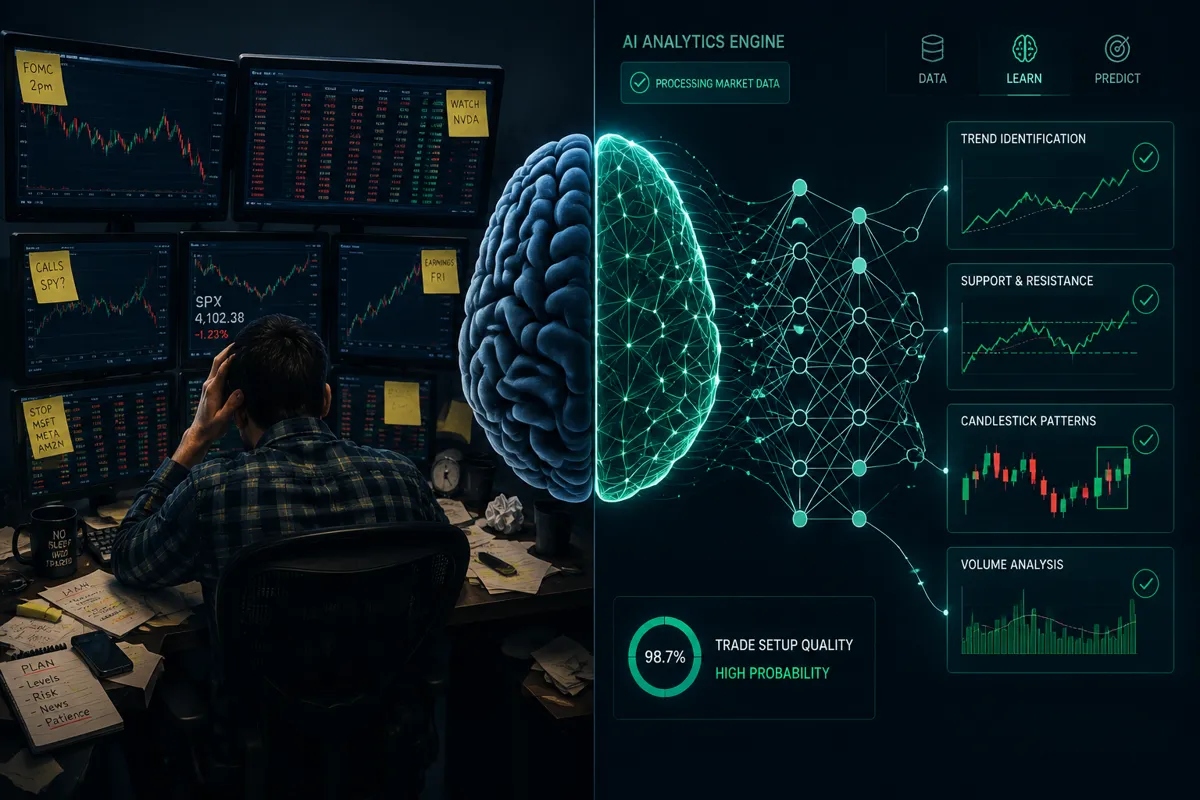
AI stock trading is the use of machine learning models, natural language processing, and algorithmic systems to analyze market data, identify patterns, and generate buy or sell signals — sometimes executing trades automatically. At its core, it's pattern recognition at a speed and scale no human can match.
Here's the plain-English version of how it works:
- Data ingestion. The AI pulls in price history, volume, earnings data, news sentiment, options flow, and sometimes alternative data like satellite imagery or credit card transactions.
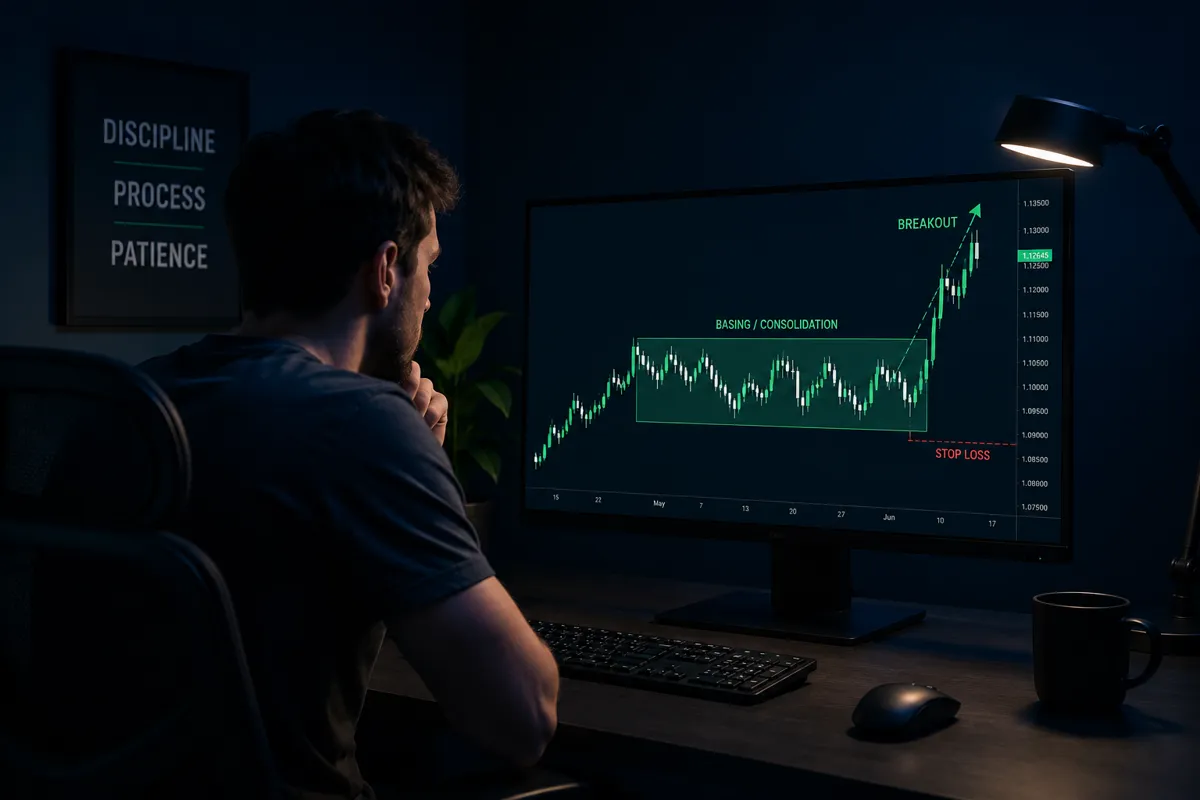
- Pattern matching. Models trained on historical market behavior look for setups that have preceded price moves in the past — things like tight consolidation before a breakout, or unusual options activity before an earnings move.
- Signal generation. The system flags stocks that match its criteria and outputs a signal: buy, sell, hold, or a probability score.
- Execution (optional). Fully automated systems place the trade. Semi-automated tools hand the signal to a human who decides whether to act.
The key word is "historical." AI finds patterns that worked before. Markets are not a physics equation — they're a crowd psychology experiment that occasionally follows rules. That distinction matters enormously.
For a deeper look at how these systems are built and tested, QuantConnect's algo validation platform is the closest thing retail traders have to institutional-grade backtesting.
AI Stock Trading: The Honest Guide for Retail Traders on What the Data Actually Shows
This is where most articles go soft. They'll say AI is "promising" and leave you hanging. Here's the actual picture.
On accuracy: No AI system consistently predicts stock market movements with high accuracy. Markets are partially efficient — meaning most publicly available information is already priced in by the time your tool sees it. Studies on algorithmic trading performance show that edges exist, but they're small, they decay over time as more capital chases them, and they require strict execution to capture.
Danelfin, one of the more transparent AI stock scoring tools available to retail traders, publishes its own backtested hit rates. Their explainable AI model scores stocks 1–10 and has shown above-average performance in certain market conditions — but they're also honest that results vary by regime. That kind of transparency is the bar every AI trading service should clear.
What AI is actually good at:
- Scanning thousands of stocks in seconds to build a watchlist
- Flagging unusual volume or options activity before it hits the news
- Removing emotional bias from the initial screening process
- Backtesting a strategy across years of data in minutes
What AI is not good at:
- Predicting black swan events (that wasn't in our bingo card for any model)
- Handling choppy tape where there's no clear trend
- Replacing your judgment on position sizing and risk management
The market truth: AI is a better research assistant than it is an oracle. Treat it like one.
Can AI Really Predict Stock Market Movements Accurately
Short answer: no, not with the kind of consistency the marketing materials imply.
Longer answer: AI can identify statistical tendencies — setups where price has historically moved in a certain direction more often than not. That's different from prediction. A 55% win rate on a clean setup with a 2:1 risk-reward ratio is genuinely valuable. It doesn't need to be 80% to be profitable. But most retail traders don't understand that math, which is why they abandon good tools after three losing trades.
The honest benchmarks:
- Most quantitative hedge funds with far more data and compute than any retail AI tool target Sharpe ratios between 1.0 and 2.0 — not "never lose" systems.
- AI-driven sentiment tools have shown measurable edge in the hours following major news events, but that window closes fast.
- Technical pattern recognition AI (like TrendSpider's automated chart analysis) improves consistency in identifying the setup — but the setup failing is always on the table.
Discipline beats prediction. That's not a motivational poster. It's the actual mechanism by which retail traders survive long enough to get good.
Best AI Stock Trading Tools for Beginners With Small Accounts
The best starting point for beginners is a tool that teaches while it signals — not one that just fires off alerts you don't understand.
Recommended starting stack for retail traders in 2026:
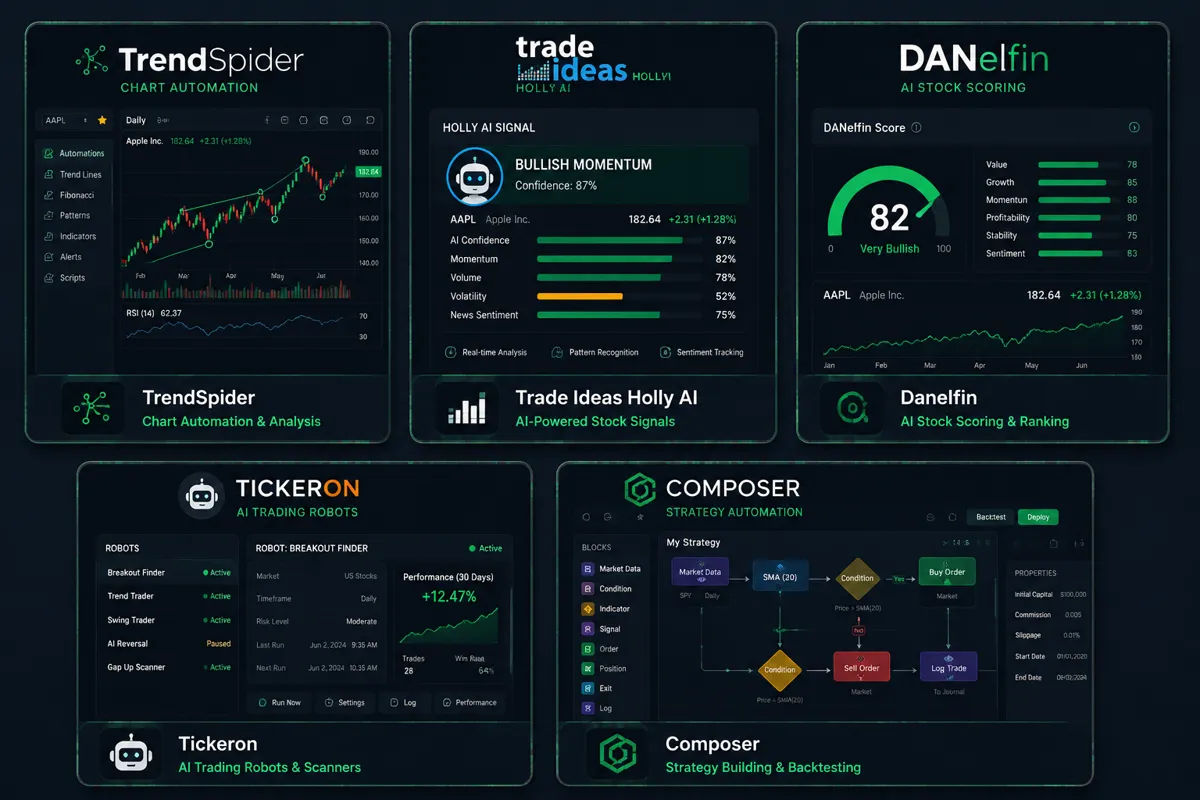
| Tool | Best For | Cost Range |
|---|---|---|
| TrendSpider | Automated chart analysis, pattern alerts | ~$33–$65/mo |
| Trade Ideas (Holly AI) | Day trading signals, pre-market scans | ~$118–$228/mo |
| Danelfin | Explainable AI stock scoring, long-term | Freemium |
| Tickeron | AI robots for multiple trading styles | ~$17–$90/mo |
| Composer | No-code strategy automation | Free–$29/mo |
| Kavout | Institutional quant signals for retail | Varies |
For beginners specifically: start with a free or low-cost tool, paper trade it first for at least 30 days, and only add capital when you understand why the signals are firing — not just that they are.
The AI trading platforms comparison at aistockpickerapps.com covers 100+ tools with honest breakdowns. Use it before spending a dollar.
Also worth bookmarking: the free swing trade planner for mapping out entries, exits, and risk-reward before you're in a live trade.
How Much Money Do You Need to Start AI Stock Trading
You need enough to manage risk properly — not enough to impress anyone.
For day trading U.S. stocks, the SEC's Pattern Day Trader rule requires a minimum of $25,000 in a margin account if you make more than three day trades in a rolling five-day period. That's a regulatory floor, not a recommendation. FINRA's investor guidance on pattern day trading explains this clearly.
For swing trading (holding positions for days to weeks), you can start with $1,000–$5,000 and still apply proper position sizing. The math: if you risk 1–2% of your account per trade, a $2,000 account means risking $20–$40 per trade. That's workable with the right setup.
The real barrier isn't capital — it's process. A trader with $500 and a defined system will outperform a trader with $50,000 and no plan. Every time. The AI tools don't change that equation. They just give the disciplined trader better data to work with.
For smaller accounts, tools like Stockhero's automated trading bots and Alpaca's commission-free API platform are built with retail account sizes in mind.
AI Trading Bots vs Human Traders: Which Is Better
Neither. The right answer is: it depends on what you're optimizing for.
AI trading bots win on speed, consistency, and emotional neutrality. They don't revenge trade after a loss. They don't overtrade because they're bored. They execute the same way at 9:31 AM as they do at 3:58 PM during power hour. For high-frequency strategies and systematic rule-following, bots have a structural edge.
Human traders win on context, adaptability, and judgment. A bot doesn't know that a CEO just got arrested twenty minutes ago. It doesn't know that the broader market is in a choppy tape that makes every signal unreliable. Humans can read the tape in ways models can't — at least not yet.
The practical answer for retail traders: use AI to build and filter your watchlist, identify the setup, and check your risk-reward. Then use your judgment to decide whether the broader context supports the trade. That's not a compromise — that's systems over hacks in action.
Explore AI trading bots reviewed for retail accounts to see which automation tools actually hold up in live conditions.
What Are the Real Risks of Using AI for Stock Trading
The risks of AI stock trading for retail traders fall into two categories: the tool's limitations and the trader's behavior.
Tool-side risks:
- Overfitting: a model trained on historical data may have "learned" patterns that were coincidental, not causal. It looks great in backtests, falls apart live.
- Data lag: most retail AI tools are working with delayed or aggregated data. Institutional players have faster pipes.
- Model decay: edges that worked in 2022 may not work in 2026 as markets adapt.
- Black box opacity: if you don't understand why a signal fired, you can't evaluate whether to trust it.
Trader-side risks:
- Turning off your brain entirely and following signals without a stop loss.
- Overtrading because the tool generates too many signals and FOFO (fear of missing out) kicks in.
- Revenge trading after a bot-generated loss, which is the worst of both worlds — automated bad entry, emotional bad exit.
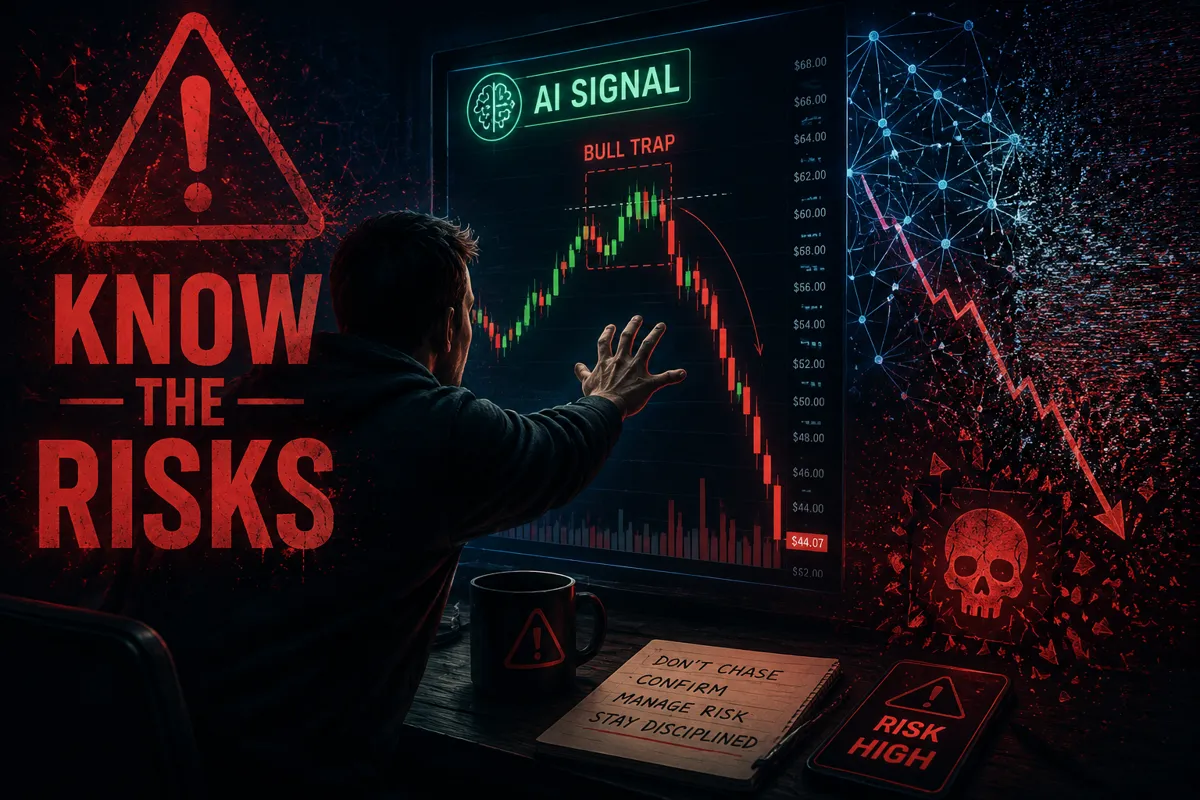
- Catching a falling knife because the AI flagged a "value" stock that's actually in a structural downtrend.
The fix: set a stop loss on every trade the AI generates. No exceptions. Getting stopped out on a bad signal is a feature, not a failure.
Does AI Stock Trading Work for Day Trading or Long-Term Investing
It works for both — but differently, and the tool requirements are completely different.
For day trading: AI shines in pre-market scanning, real-time alert generation, and options flow analysis. Trade Ideas' Holly AI is the industry benchmark here — it runs thousands of simulated strategies overnight and surfaces the highest-probability setups for the next session. The edge is in the speed of the watchlist, not the trade itself. You still need to read the price action, manage the entry and exit, and respect your stop loss.
For day trading resources and scanner comparisons, the day trading tools section at aistockpickerapps.com is the right starting point.
For long-term investing: AI tools like Danelfin and Kavout score stocks on fundamental and quantitative factors, giving retail investors a more systematic way to filter ideas than reading analyst reports written by people with conflicts of interest. The signal-to-noise ratio is better, but you're still making a judgment call on valuation and timing.
For swing trading (the middle ground most retail traders actually operate in): AI-generated setups combined with human judgment on support and resistance levels is the most practical combination. Check the swing trading tools and systems breakdown for what's actually worth paying for.
How Do I Know If an AI Trading Service Is a Scam
If it promises returns, it's a scam. Full stop. No legitimate AI trading service guarantees profits — because no one can.
Red flags that should end the conversation immediately:
- "Our AI has a 90%+ win rate" with no verifiable backtest data
- Subscription fees structured around a percentage of "profits" from a system you can't audit
- Testimonials with dollar amounts and no methodology
- No information about the team, the model, or the data sources
- High-pressure sales tactics with countdown timers and "limited spots"
Green flags that signal legitimacy:
- Transparent methodology (how the model works, what data it uses)
- Published backtest results with clear assumptions and limitations
- Free trial or paper trading mode before you commit money
- Registered with FINRA or SEC where applicable (check FINRA BrokerCheck)
- Community or forum where users discuss real results — including losses
Play stupid games, win stupid prizes. A $99/month AI signal service promising 300% annual returns is a $99 lesson in why you should have read this guide first.
Common Mistakes Retail Traders Make With AI Trading
These are the patterns that show up over and over. Knowing them doesn't make you immune — but it does make you harder to fool.
1. Treating signals as certainties. A signal is a probability, not a guarantee. Every trade needs a defined stop loss before entry.
2. Skipping the paper trade phase. Paper trade it first is not optional advice for beginners. It's how you learn whether a tool's signals actually match your trading style before real money is on the line.
3. Analysis paralysis from too many tools. Six scanners, three AI services, and a Discord full of alerts is not an edge — it's noise with a subscription fee. Cut the noise, keep the alpha.
4. Ignoring position sizing. The AI found a great setup. You put 40% of your account into it. The setup fails. Now you're not just wrong — you're damaged. Risk management is the job.
5. Abandoning a working system after a losing streak. Every strategy has drawdown periods. Revenge trading after three AI-generated losses is how traders blow up accounts that were otherwise fine.
6. Confusing backtested results with live performance. A strategy that returned 40% annually in backtests from 2018–2023 may have been curve-fitted to that specific period. Always check out-of-sample performance.
Use the free stock health scorecard to add a systematic filter before acting on any AI signal.
AI Stock Trading Free vs Paid Platforms: What You Actually Get
Free tools are real and genuinely useful. They're just not complete.
What free AI trading tools typically offer:
- Basic stock screeners with preset filters
- Delayed price data and chart analysis
- Limited AI signals (often a daily cap)
- Educational content and community access
What paid tiers add:
- Real-time data and faster signal delivery
- Unlimited scans and custom filter building
- Backtesting capabilities
- Deeper fundamental and sentiment data
- Direct broker integration for faster execution
The honest comparison: free tools are fine for learning and building your watchlist. Once you're trading with real capital and your edge depends on timing, the $30–$100/month for a quality paid tool is a cost of doing business, not a luxury.
Start with the free AI stock trading tools at aistockpickerapps.com before paying for anything. Several of the free screeners and planners there are legitimately competitive with paid alternatives for swing traders.
What Skills Do You Need Before Using AI Trading Software
AI trading software amplifies your process. If your process is broken, it amplifies that too.
Non-negotiable skills before you add AI:
- Basic price action reading. Know what a breakout looks like. Know the difference between a bull trap and a real breakout. Understand support and resistance.
- Position sizing math. Know how to calculate how many shares to buy based on your stop loss distance and account risk percentage.
- Risk-reward evaluation. Before every trade, know your target and your stop. If the risk-reward isn't at least 1:2, pass.
- Emotional self-awareness. Know your triggers for overtrading and revenge trading. AI doesn't fix psychology — it just removes some of the decision fatigue.
You don't need a finance degree. You need a repeatable process and the discipline to follow it. The AI handles the scanning. You handle the judgment.
The AI screeners and research tools at aistockpickerapps.com are built assuming you already know what you're looking for. If you don't, start with the education section before touching the tools.
Is AI Stock Trading Legal for Retail Investors
Yes, completely legal. Retail investors in the U.S. can use AI tools, automated trading bots, and algorithmic strategies without any special licensing or registration.
The relevant rules to know:
- The Pattern Day Trader rule (FINRA Rule 4210) applies regardless of whether your trades are AI-generated or manual — if you make more than three day trades in five business days in a margin account under $25,000, you'll be flagged.
- Fully automated trading bots that execute on your behalf are legal, but you're still responsible for the trades. "The bot did it" is not a defense with your broker or the SEC.
- If you're using an AI service that pools funds or manages money on behalf of others, that's a different legal category entirely and requires registration.
For individual retail traders using AI tools to inform their own decisions: no restrictions, no special requirements. Just make sure the platform you're using is itself registered and legitimate.
Frequently Asked Questions
Can a beginner use AI stock trading tools without experience?
Yes, but with a caveat. Beginners can use AI screeners and scoring tools to learn what to look for in a stock. Using fully automated trading bots without understanding the underlying strategy is a different matter — that's how beginners lose money faster than they would manually.
What is the best AI stock trading platform for 2026?
There's no single best platform — it depends on your style. For day trading signals, Trade Ideas is the industry standard. For chart automation, TrendSpider. For explainable AI scoring, Danelfin. For no-code strategy building, Composer. Compare them at aistockpickerapps.com/ai-trading-platforms.
How accurate are AI stock trading signals?
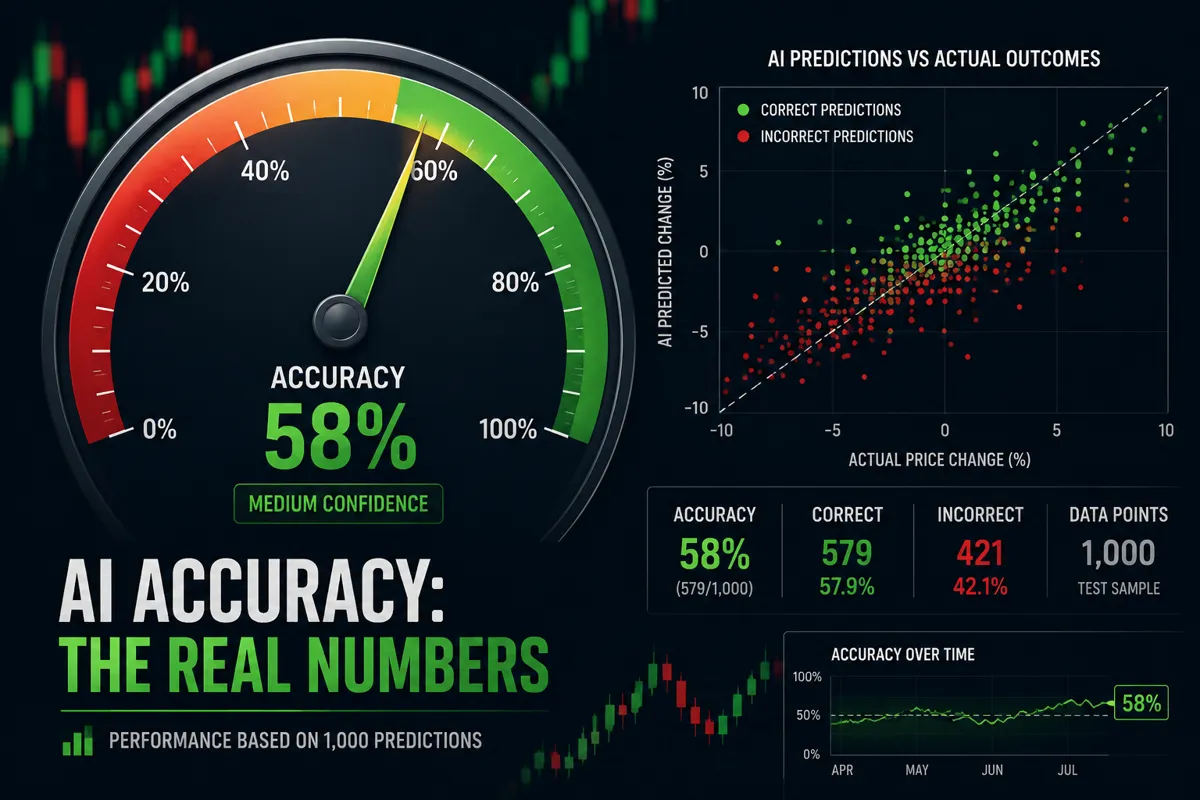
Accuracy varies widely by tool, market condition, and strategy. Expect win rates in the 50–65% range for well-designed systems in trending markets. In choppy tape, most AI signals degrade significantly. No verified system consistently hits 80%+ in live trading.
Do AI trading bots work on small accounts?
Yes, but position sizing becomes critical. With a small account, one oversize loss can set you back weeks. Tools like Composer and Alpaca are designed with small account constraints in mind.
How much does AI stock trading cost per month?
Free tools exist and are genuinely useful for screening. Paid AI trading platforms range from about $17/month (Tickeron entry tier) to $228/month (Trade Ideas professional). Most serious retail traders spend $50–$150/month on their full tool stack.
What's the difference between an AI signal and an AI trading bot?
A signal tells you what to consider trading. A bot executes the trade automatically. Signals require human action; bots don't. Both have legitimate uses — signals are better for traders who want control, bots for those who want systematic execution without emotion.
Can AI stock trading replace a financial advisor?
No. AI trading tools are research and execution aids, not financial planning services. For retirement planning, tax strategy, and portfolio allocation, a registered financial advisor (check Investor.gov for verification) is a different category of service entirely.
Is there a free way to test AI stock trading before spending money?
Yes. Most platforms offer free trials or paper trading modes. The free tools section at aistockpickerapps.com includes screeners, planners, and calculators you can use immediately without a credit card.
What does "AI stock trading accuracy" actually mean?
It typically refers to the percentage of signals that result in a profitable trade (win rate). Win rate alone is misleading — a 40% win rate with a 3:1 risk-reward ratio is more profitable than a 70% win rate with a 0.5:1 ratio. Always evaluate accuracy alongside the average win/loss size.
Are AI trading results on Reddit reliable?
Treat Reddit results the same way you'd treat a stranger's tax advice: interesting, occasionally useful, never the basis for a financial decision. Survivorship bias is severe — people post wins, not the full account history. Verify any claimed results with your own paper trading before committing capital.
Conclusion: What to Actually Do With This
AI stock trading in 2026 is a real tool with real limitations. It's not magic, it's not a scam (when the platform is legitimate), and it's not going to replace the fundamentals of good trading: a defined setup, a stop loss, and the discipline to follow your plan when the market gets weird.
Here's the practical path forward:
- Audit your current process first. If you don't have a written trading plan with defined entry, exit, and stop loss rules, no AI tool will fix that. Build the process before adding the tool.
- Start with free tools. Use the free screeners and planners to get a feel for AI-assisted analysis before spending money.
- Paper trade any new AI signal service for 30 days. Track every signal it generates, not just the ones you would have taken. See the actual win rate and average risk-reward in your market conditions.
- Pick one tool that matches your style. Day trader? Start with Trade Ideas. Swing trader? TrendSpider or Danelfin. Automation-curious? Composer. Don't run six tools at once — that's analysis paralysis with a monthly fee.
- Never remove the stop loss. The AI found the setup. Risk management keeps you in the game long enough to benefit from it.
Signal over noise. Process over prediction. That's the whole game.
Not financial advice. AI stock trading involves risk of loss. Past performance of any AI system or trading strategy does not guarantee future results. Always do your own research and consider your financial situation before trading.
FullStack Alpha cuts the noise so you can keep the alpha. See the AI tools, scanners, and systems we actually rate at aistockpickerapp.com.