How Does a Prop Firm Make Money? Follow the Evaluation Fees

Last updated: October 22, 2026
Quick answer: How do prop firms make money? Mostly from evaluation fees. Retail challenge firms charge traders to take a test, collect again on resets, subscriptions, and activation fees, and pay out a fraction of that to the few who pass and stay eligible. Many funded accounts are simulated, so a trader's payout is often funded by other traders' fees, not by market profits.
That isn't automatically a scam. It's a business model, and once you see it clearly, you can buy a challenge the way you'd buy any expensive subscription: with your eyes open and a spending limit.
Key takeaways
- Fees come first. Evaluation fees are paid upfront by every buyer. Payouts go only to the minority who pass and qualify.
- Pass rates are low where they're published. Take Profit Trader states that 20.37% of registered users passed a trading test between January and August 2023.
- Live capital is rarer still. MyFundedFutures discloses that fewer than 1% of participants reach a live capital stage.
- Many accounts are simulated. Alpha Trader Firm's own site states that it provides simulated trading environments and that "no live trading occurs."
- Payouts are real. Blockchain trackers counted $34.5 million in verified Tradeify futures payouts in the first 22 days of October 2026 alone.
- Your rule: compare total spending with cash received, including every failed attempt.
How do prop firms make money? The short answer
A retail prop firm makes money before a trader places a single trade, because the evaluation itself is the product. Trading income can add to that, but the fee business and the market-trading business are two different things and need separate math.
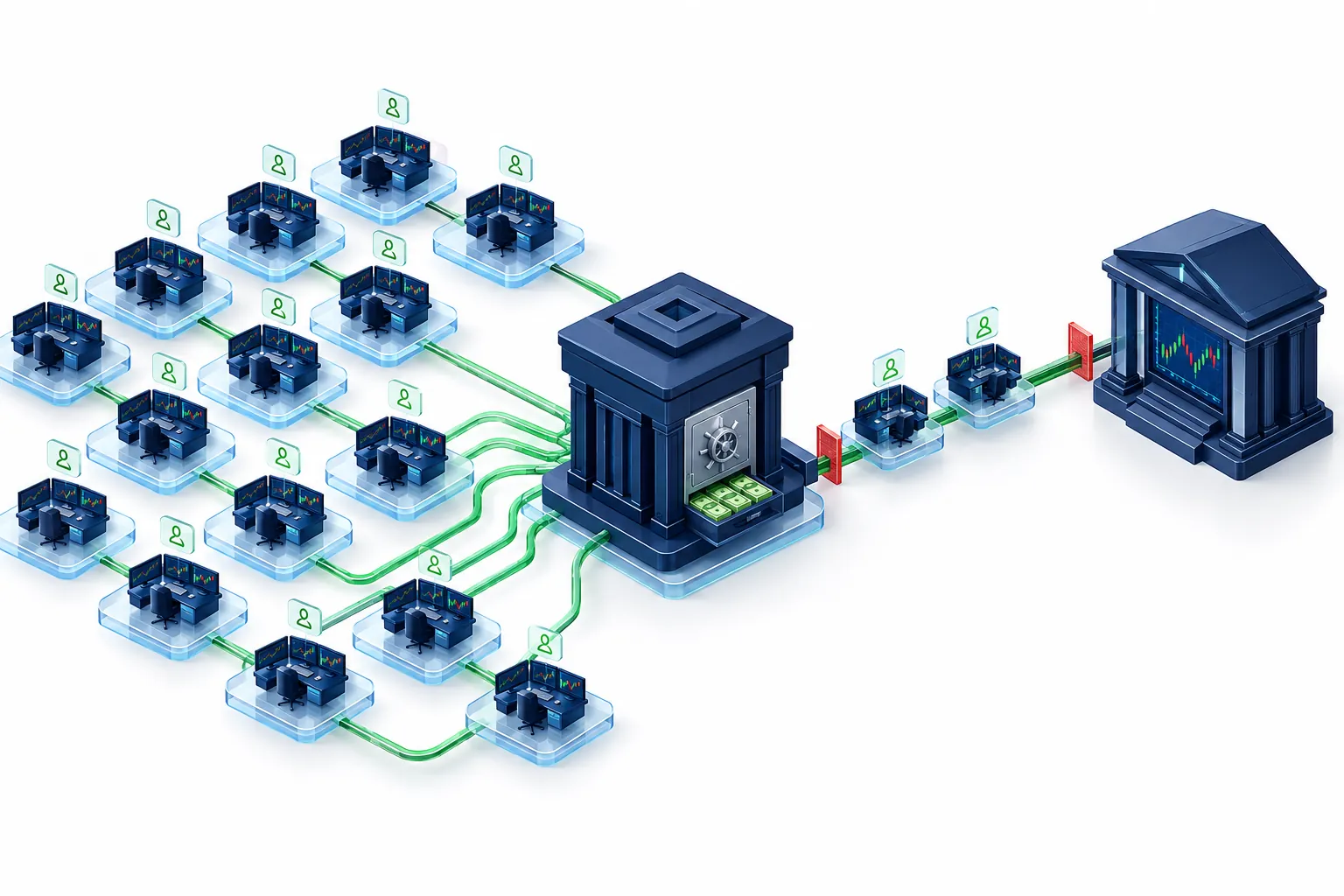
The attractive part for a buyer is access: a defined route to trading size under someone else's rules, with possible cash payouts. The uncomfortable part is that the firm keeps the fee whether you qualify or not.
Think of it like a gym membership sold on January 2. The gym's model works because most members stop showing up. A prop firm's model works because most buyers don't pass. Neither is fraud. Both are worth understanding before you sign.
What is a prop firm, and how does it work?
A proprietary trading firm trades its own capital rather than managing client money. Traditional prop desks hire traders through interviews. Online challenge firms sell open-access tests instead. They share a name and very little else.
A retail challenge usually runs like this:
- You pay for an evaluation.
- You try to hit a profit target without breaking the drawdown or daily loss rules.
- Passing moves you to a funded stage, often with an activation fee.
- Eligible profits can lead to cash payouts under a profit split.
Buy the rules you can trade, not the account number that looks impressive.
Do prop firms use real money?
Often, no. "Funded" is a label, not proof that orders reach a market. Many retail firms run funded accounts in simulation and pay traders a contractual reward based on simulated results. Alpha Trader Firm states it plainly in its footer: it provides simulated environments and no live trading occurs.
Some firms copy selected traders into live accounts or move strong performers to a live stage. MyFundedFutures, for example, describes a live capital stage that fewer than 1% of participants reach. Don't assume your account is live unless the agreement says so.
This is the single most important point in the whole model. A simulated account's profit is not money the firm earned from the market. If no matching live trade made money, the payout comes from the firm's other cash, which is mostly fees.
Do prop firms share profits or keep all the money?
They share, under the contract. A 90/10 split on a simulated account means the firm pays you 90% of your simulated profit as a reward and "keeps" 10% that it never actually earned. The split describes how your payout is calculated, not where the money comes from.
On a live account, the firm's share is real trading revenue. That's why live stages are rare and tightly gated.
Why do evaluation fees matter more than trading profits?
Because fees arrive from every buyer, upfront and certain, while payouts depend on a chain of events most buyers never complete. That doesn't prove fees beat trading income at every firm, but it explains why the industry looks the way it does.
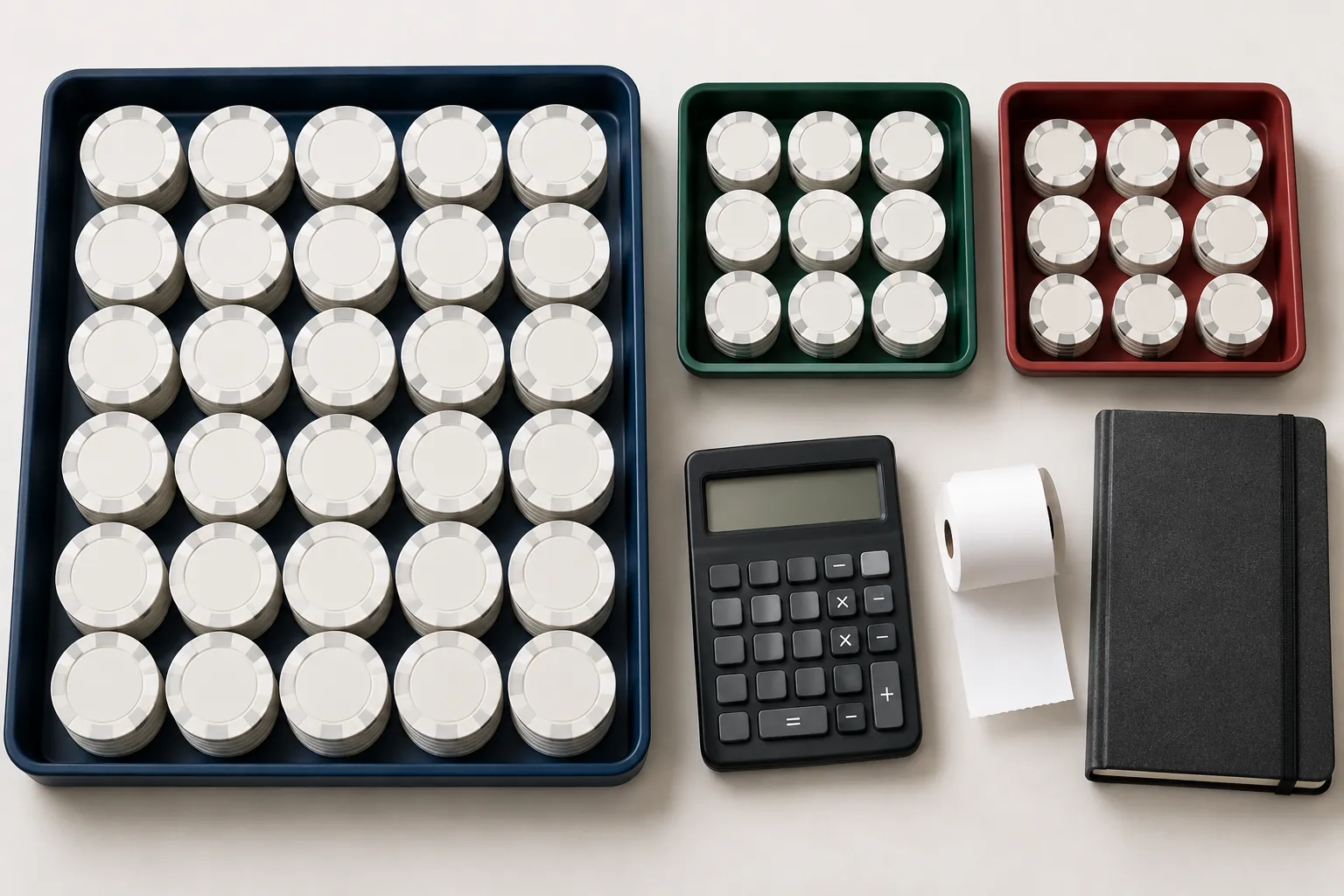
For the trader, the fee is immediate. Passing, staying eligible, and getting a withdrawal approved are three separate hurdles that come later.
Where does prop firm revenue come from?
| Revenue source | How it works | Real example | What it means for you |
|---|---|---|---|
| Evaluation fee | Payment for a test attempt | FXIFY One Phase lists at $39 to $1,599 by size | Money at risk before any payout |
| Monthly subscription | Recurring charge while you're evaluating | Topstep Trading Combine, $49 to $149 a month | A slow pass costs more |
| Reset | Paid restart after a breach | FXIFY Futures Standard reset, $79 | Small charges become a big bill |
| Activation fee | Charge to open the funded stage | Topstep $149, Take Profit Trader $130 | The sticker price isn't the full price |
| Add-ons | Faster payouts, higher splits | FXIFY 14-day payout add-on, split upgrades | Optional, and they add up |
| Payout tiers and caps | Partial release of early profits | FXIFY Futures releases 60% on payout one | The firm holds cash longer |
| Live trading income | Profits from actual market positions | Live stages at firms like MFFU | Requires real execution and real risk |
Prices from firm pages and PropFirmMap as of October 2026. Not every firm charges every fee.
How do prop firms make money from trader fees, and how much?
No firm publishes audited margins, so there's no honest industry-wide number. But you can model it with published pass rates instead of guesses.
Fee receipts: $250,000 1,000 traders each buy one $250 evaluation.
Traders who pass: about 204 Using Take Profit Trader's published 20.37% pass rate.
Traders who get paid: about 51 Assuming one in four passers receives a payout, which is a hypothetical input.
Modeled payouts: $51,000 Each paid trader receives $1,000 in total during the period.
Surplus before costs: $199,000, or about 80% of fees This is not net profit. Staff, tech, data, marketing, and refunds come out of it.
That's how a fee-led firm can pay real money to winners and still have most of the fees left over. It doesn't show that any specific firm has these results.
Calculator: how do prop firms make money from one cohort?
Change the inputs and watch the surplus move. "Average payout" means total cash paid per recipient over your chosen period.
Prop firm economics calculator
Hypothetical defaults, not industry data. Use one group of traders and one matching payout period.
Educational model only; excludes refunds, renewals, operating costs, taxes, and live trading gains or losses.
Try a stress test: double the share of passers who get paid, then double the average payout. The room for operating costs shrinks fast. That's the scenario where firms tighten rules, add buffers, or change payout terms.
How do prop firms make money when traders are profitable?
By keeping total payouts below total fees plus any live trading income, over time. Profitable live traders generate real revenue. Profitable simulated traders generate obligations. The tools for managing those obligations are the rules you see in every contract: consistency caps, payout buffers, release tiers, per-account caps, and drawdown floors.
Those rules aren't evil. They're risk controls. But they do mean the rulebook is part of the firm's revenue model, not just yours.
Are evaluation fees refundable if you fail?
Almost never. Some firms refund the evaluation fee after your first payout, which is a reward for passing, not insurance for failing. Check cancellation rights separately, and ask whether a reset restarts billing or a subscription keeps renewing after you stop.
The checkout button is excellent at collecting money. It rarely volunteers to cancel itself.
How do prop firms make money from you specifically? The real cost to funded
The fee on the banner is the smallest number you'll pay. Here's what a $50,000 futures account costs if you pass in month two after one reset, using published list prices.
| Firm | Evaluation | Reset | Activation | Two-month cost to funded |
|---|---|---|---|---|
| Topstep 50K | $49 to $149/mo (assume $99) | New Combine at the monthly rate | $149 | About $347 |
| FXIFY Futures 50K Standard | $89/mo | $79 | $125 | About $382 |
| FXIFY Futures 50K Expert | $149/mo | $125 | $0 | About $423 |
| Take Profit Trader 50K | about $150/mo | Paid reset | $130 | About $430 or more |
Prices from firm pages and PropFirmMap, October 2026. Your number changes with promos, plan size, and how many resets you need.
Now run it the other way. If your first payout is $1,000 and you spent $400 getting there, your real profit is $600. Spend three months and two resets to get the same payout and you might be close to zero. That gap is exactly how prop firms make money from traders who technically "win."
Which prop firms are actually paying? October 2026 verified data
Payout claims in press releases are marketing. Blockchain-verified payouts are evidence. Here's what Payout Junction recorded from October 1 to 22, 2026:
| Firm | Verified payouts | Number of payouts |
|---|---|---|
| Tradeify (futures) | $34,512,447 | 21,650 |
| FundedNext | $13,594,068 | 11,166 |
| MyFundedFutures | $12,035,406 | 9,184 |
| Alpha Trader Firm | $402,932 | 327 |
| FXIFY | $218,612 | 179 |
These counts include only on-chain transfers, so firms that pay mostly by bank or card show lower totals than they really pay. Topstep and Apex, for example, don't appear in this table at all. The point isn't the ranking. It's that you can check whether a firm pays before you give it money.
Big payout totals also tell you something about the model. A firm paying $34 million in three weeks is collecting far more than that in fees, or it couldn't keep doing it.
Warning signs a prop firm's model is under strain
When payouts start outrunning fees, firms don't send a press release. They change the rules. Watch for these:
- New buffers or release tiers added to existing account types, holding back part of every withdrawal.
- Tighter consistency rules that make big winning days count against you at payout time.
- Payout reviews that take longer and cite vague violations like "flipping" or "hedging."
- Heavy discounting, such as 40% to 90% off codes, which pulls in new fee revenue fast.
- Trustpilot warnings. When Trustpilot hides a firm's score for a guidelines breach or removes fake reviews, take note.
- A sudden switch to simulated-only funded stages or removal of the live path.
None of these proves a firm is failing. Two or three at once is a reason to withdraw what you can and stop buying new accounts.
How do prop firms make money from different trader types?
The fit between your style and the rules decides how much you pay before you get paid. A mismatch is the most expensive line item in this whole model.

Day traders fit best when the program wants flat positions by a cutoff. Check how the daily loss is measured and when it resets. Equity-based limits can breach you before a trade closes.
Swing traders hit overnight, weekend, and news restrictions. A firm that forces early exits changes your strategy's results. Build the method first, using guides like how to find stocks for swing trading, then find compatible terms.
Scalpers live and die on commissions, spreads, and slippage. Confirm minimum holding times and automation rules in writing. If you're running code, read whether AI trading bots make money first.
Long-term investors are better served by a personal brokerage account. A challenge contract adds conditions that do nothing for a buy-and-hold approach.
📌 What You Should Know
- The fee is the product. You're buying a test, data access, and a rulebook. Treat it as spending, not a deposit.
- Published numbers beat marketing numbers. A firm that publishes its pass rate (Take Profit Trader) or its live-stage rate (MFFU) is telling you more than one that publishes only payout totals.
- Verified payouts exist. On-chain trackers like Payout Junction show which firms are actually paying each month. In October 2026, Tradeify, FundedNext, and MyFundedFutures led the verified totals. Those counts only include blockchain transfers, so they're a floor.
- The PDT rule doesn't drive this anymore. Futures were never under it, and FINRA's $25,000 stock minimum ended June 4, 2026, with brokers phasing it in until October 2027. Self-funding a small account is more realistic than it used to be.
- The industry base rate is brutal. Low pass rates and under-1% live-capital rates are the system working as designed.
⚠️ What to Look Out For
- Reset spirals. Three $79 resets plus a $125 activation turns an $89 test into a $451 bill. Set a spending ceiling before checkout and don't raise it after a breach.
- Monthly billing on a slow pass. A $149 subscription over four months is $596 before you're funded.
- Payout release tiers. If the first payout releases only 60% of the eligible amount, the firm keeps your cash longer. Know the schedule before you count the money.
- Rule changes after a discount. Save the rules version with your receipt. Some traders report different terms on promo purchases.
- Profit splits that sound generous. 100% of simulated profit is still paid from somewhere. Ask how payouts are funded and what caps apply.
- "Funded" labels. Ask directly: simulated or live? The answer tells you who carries the market risk.
- Influencer pitches. Discount codes in YouTube and Reddit posts pay the poster. Our list of 9 signs a Reddit trading post is really an ad applies to prop firm promos too.
Track every fee and payout in one ledger. Our best trading journal comparison covers tools that log costs automatically, and the free trade plan builder sizes positions to the loss limit you're actually trading.
How do prop firms make money, and how do they work? Related questions answered
- How do prop firms work: you pay to trade a set of rules; pass and you share profits. The firm earns on fees and, on live stages, on trading.
- What is a prop firm challenge: a paid test with a profit target, a drawdown floor, and a daily loss limit, usually on a simulated account.
- How much is a prop firm account: a $50,000 futures evaluation typically runs $89 to $149 a month, plus activation at some firms.
- How much do prop firm traders make: most make nothing net of fees, because most don't pass. Those who do are paid a split of eligible profit, minus caps and tiers.
- How do prop firms not lose money: by keeping total payouts below fee income, and by using consistency rules, buffers, and caps to manage simulated payout obligations.
- Can you make money with prop firms: yes, if your received payouts exceed every fee you paid. Track both sides.
For the firms that do this best, see our ranking of the top prop firm picks for 2026. For firm-specific rules, read the FXIFY prop firm rules and Alpha Trader prop firm rules guides.
How do prop firms make money compared to other routes to trading size?
A paid challenge competes with trading your own account, joining a traditional desk, and paper trading. Knowing how prop firms make money helps you compare those routes without treating a headline account size as free buying power.
Your own brokerage account. Full control over strategy and withdrawals, and you carry every loss. Pick this if ownership and holding freedom matter more than size. Our guide to day trading without $25K covers small-account options.
A broker-backed prop program. A broker name on the page doesn't settle whether the account is live or who owes your payout. Check the contracting entity and execution arrangement.
A traditional prop desk. Hiring, interviews, and oversight instead of an open-access test. The desk makes money mainly from trading, which is a different business from a retail evaluation service.
Paper trading. Free, and it removes the fee from the learning process. Our list of free paper trading simulators covers seven that cost nothing. It flatters fills and removes pressure, as our breakdown of paper trading slippage shows, but a trader who keeps breaking a practice loss limit has no reason to pay for the same lesson.
Prop firm fees versus broker commissions
An evaluation fee buys access to a test. A commission pays for executing trades. A challenge can charge both, and commissions reduce the performance you're graded on. "No commission" is not "no cost."
How do you judge whether a prop firm is fair?
By its written terms, predictable costs, and evidence that it pays what it promises. A large split can't make up for rules you can't explain.

Five features separate a fair firm from a fee machine:
- Clear account status. Every stage says whether trading is simulated or live.
- A complete fee schedule. Entry, renewal, reset, activation, and payout-related charges on one page.
- Worked risk examples. The firm shows how open positions and withdrawals move your limits.
- Written payout conditions. Eligibility, deductions, timing, caps, and review grounds defined in advance.
- A real cancellation and dispute process, with an identifiable legal entity.
A useful test before paying: send support one concrete scenario. "If an open winner raises my floor and then reverses, what happens?" A reply that just says "manage risk" doesn't answer it.
Ask what payout statistics actually measure
Before trusting any number, ask whether it counts people, accounts, or attempts; whether "paid" means requested, approved, or received; and whether repeat buyers are counted twice. A correct number can still dodge your real question.
Is paying an evaluation fee worth it?
It can be, when you already follow a tested strategy, the rules fit it, and the full fee budget is money you can afford to lose. It's a poor buy when you're hoping the purchase will create discipline that practice hasn't.
FAQ
How do prop firms make money?
Primarily from evaluation fees, plus subscriptions, resets, activation charges, and add-ons. Firms with live stages also earn from trading. Because most buyers don't pass, fee income usually exceeds payouts, which is how firms pay winners and stay in business.
How do prop firms make money on funded accounts?
On simulated funded accounts, they don't earn from the market at all; the payout is funded from fee income. On live funded accounts, the firm keeps its share of real trading profits. Ask which kind you're buying.
Can you actually make money with prop firms?
Yes. Firms like Tradeify, FundedNext, and MyFundedFutures paid millions in verified payouts in October 2026. Your personal result is payouts received minus every fee paid. Passing alone doesn't make you profitable.
What percentage do prop firms take from your profits?
Usually 10% to 20%. Splits of 80/20 and 90/10 are common, and some firms advertise 100% on the first $10,000 to $25,000. Early payouts can also be released in tiers or capped.
How much is a $10,000 prop firm account?
It depends on the firm. FXIFY's One Phase lists a $10,000 account at $59 before discounts, per PropFirmMap. Check renewal, reset, and activation costs before comparing.
Do prop firms use real money?
Many don't. Retail funded accounts are often simulated, and some firms state it outright. A small share of traders may reach a live stage, which MyFundedFutures puts at fewer than 1% of participants.
Are failed evaluation fees returned?
Rarely. Refunds usually come after a first payout, not after a failure. Read the refund clause before buying, and don't assume a promotional refund covers your plan.
How do prop firms make money with 90% discounts?
Volume. A deep discount brings in buyers who would never pay full price, and most of them still fail. The firm's cost of running one more simulated evaluation is tiny, so even a $30 fee is mostly margin. Discounts are a sign the model depends on new buyers, not a gift.
How do prop firms make money if a trader passes on the first try?
From the fee that trader paid, plus the fees of everyone who didn't pass. One successful trader is cheap for the firm. A cohort where most traders pass would break the model, which is why targets, drawdowns, and consistency rules exist.
Is the prop firm model legal?
Retail evaluation firms generally operate as sellers of trading education and simulated assessment services, not as regulated brokers or investment advisers. That means fewer protections for you. US regulators have warned about some firms, so check the legal entity, the governing law in your contract, and any regulatory actions before paying.
Conclusion
Now you know how prop firms make money: you're the customer before you're the trader. That's not a reason to avoid them. It's a reason to budget for them.
Before buying, save the fee schedule, the agreement, and the payout rules. Mark every clause that can end an account or delay payment, then trade your method against those conditions in simulation first. Set a hard spending ceiling and keep one ledger for every attempt. Systems beat hope.
That's the honest answer to how do prop firms make money: fees first, trading second, and a rulebook that protects the gap.
Cut the noise, keep the alpha. FullStack Alpha has tested 200 AI stock tools; compare the ones that fit your budget in the FullStack Alpha directory.
Affiliate disclosure: FullStack Alpha may earn a commission from qualifying purchases through affiliate links.