Day trading definition: What beginners miss in 2026

Quick answer: The day trading definition is buying and selling the same financial instrument within one day to profit from short-term price changes. Closing before the session ends removes overnight exposure, but costs, poor execution, and oversized positions can still drain an account. The activity can be legal while remaining financially punishing.
Key takeaways: profitability and risks
Intraday trading is a speculative activity, not a dependable salary. Beginners should understand the transaction, the evidence, and their broker’s margin framework before risking funds.
- FINRA: Exposure and available equity matter more than a catchy strategy name.
- June 4, 2026: The replacement intraday margin framework became effective.
- October 20, 2027: Eligible firms have a transition window, so broker implementation differs.
- Investor.gov: Borrowing creates losses beyond the money initially deposited.
- FullStack Alpha: A scanner can find candidates; it cannot supply judgment.
- EBC: Costs and behavior help explain why active traders struggle.
What is the day trading definition, and what counts as a day trade?
The practical day trading definition is opening and closing exposure to the same security during the same trading day. Buying a stock and selling it before the session closes qualifies; holding it until the following day does not. Regulatory account treatment is a separate question.
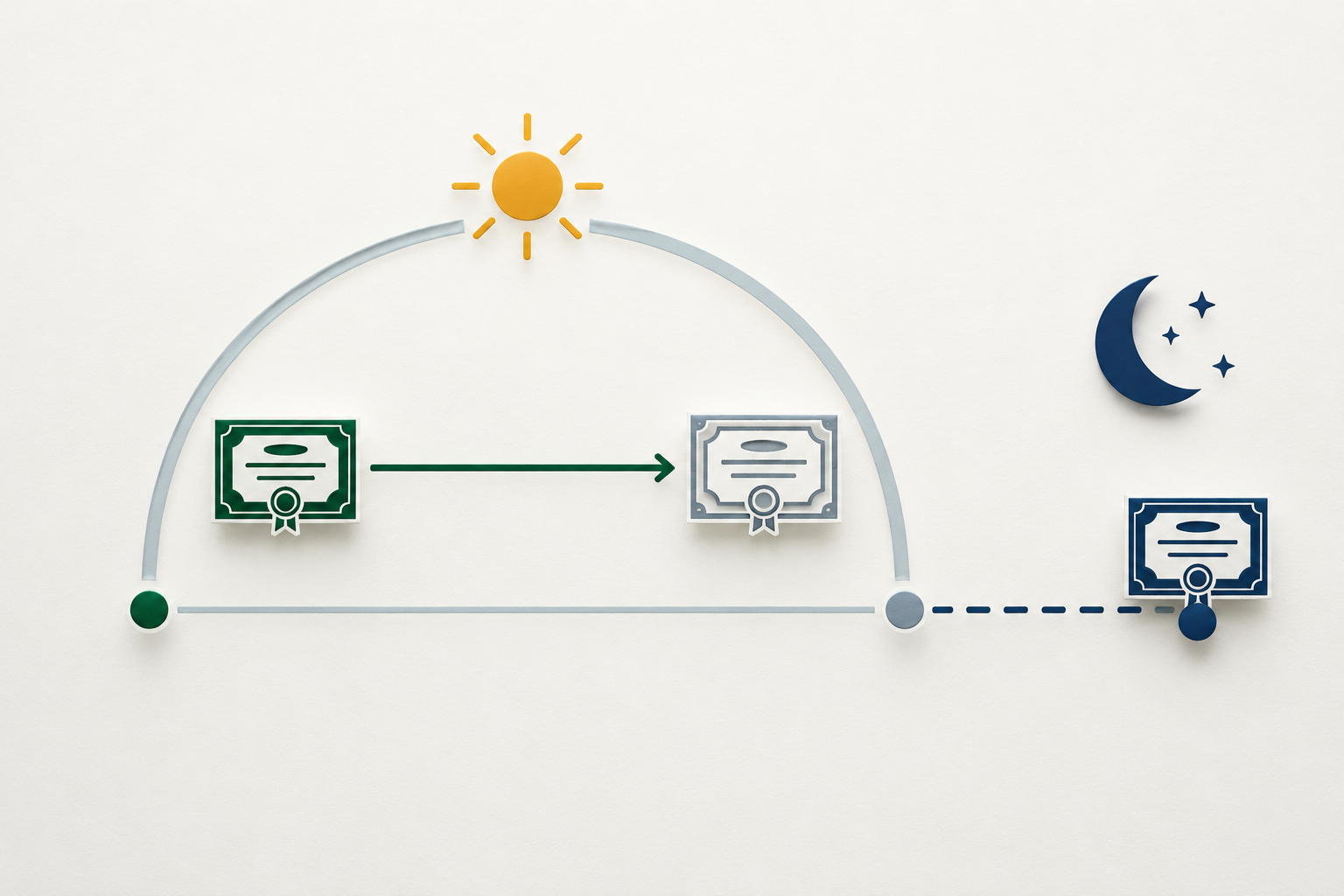
A trader can also sell short, meaning sell borrowed securities, and then buy them back that day. That reverses the transaction order, not the economic purpose. A short position carries different risks from buying securities outright.
The definition of day trading describes the holding period. It says nothing about skill, financial suitability, or expected profit. A clean setup means an opportunity that meets written conditions, not a security that looks exciting.
Stocks, forex, and the same-day boundary
For stocks, the day trading definition concerns securities bought and sold during one day session. In forex, the same broad idea applies to currency positions, but trading hours, financing, and regulation differ. Don’t transfer a securities account rule to a currency product without checking it.
“Within same trading” is incomplete shorthand sometimes found in copied explanations. “Within the same session” is clearer. Your broker determines how transactions, partial fills, and overnight positions affect the account.
History: why older definitions mention trade counts
Older explanations link the day trading definition to the pattern day trader classification. That combined a transaction definition with an account restriction. The replacement framework focuses on intraday exposure instead of counting day trades.
Why do most day trading accounts shrink?
Meeting the day trading definition takes one round trip in a single session; staying funded takes a process that survives costs.
Accounts shrink when trading losses and expenses exceed trading gains. Frequent transactions magnify small disadvantages, while borrowed funds can turn an ordinary price move into serious account damage.

The day trading definition sounds simple because it describes a transaction, not a business model. Retail traders compete with other traders, professional firms, and hedge funds while paying for execution and absorbing mistakes. Activity alone produces no advantage.
Published work by Fernando Chague, Rodrigo De-Losso, and Bruno Giovannetti, Day Trading for a Living?, examined Brazilian equity futures entrants and found poor outcomes among persistent participants. That is evidence about a particular population and instrument, not a universal loss percentage for every trader worldwide.
The honest conclusion is narrower than internet folklore: profitable traders exist, but beginners should not budget around assumed profits. “Most lose” is a warning; “everyone loses exactly the same percentage” is unsupported precision.
Cost, commission, and spread
Commission-free trading can still involve expenses. The bid ask spread is the gap between the price available to sellers and the price paid by immediate buyers. Slippage means receiving a different execution price from the one expected.
Borrowing costs, short-stock charges, and subscriptions add pressure. Each transaction must clear its costs before contributing profit. Check securities financing separately from software expenses and other financial obligations.
What common mistakes do beginners make?
Overtrading increases friction. Revenge trading increases exposure after a loss. Moving a stop loss farther away changes the original risk-reward agreement after money is already at risk.
Getting stopped out is an expense to evaluate, not an insult to avenge. A stop order also does not guarantee the requested price during a fast market. Position sizing must allow for worse execution.
How much can you make?
There is no dependable day trader salary for someone trading personal funds. Net results depend on average gains, average losses, frequency, capital, and expenses. A winning day does not establish a repeatable business.
Use the trading expectancy calculator to test assumptions, then read the financial math behind whether intraday speculation is worth it. Neither calculation turns an assumed edge into evidence.
Who is day trading for: day traders, swing traders, scalpers, or long-term investors?
Your calendar answers this faster than any chart, because the day trading definition assumes you can supervise every position until it closes.
Intraday speculation suits people who can monitor positions, tolerate uncertain income, and lose their allocated funds without damaging their financial life. Long-term investors generally have different goals, time demands, and reasons for buying securities.

The day trading definition should help you select a time horizon, not pressure you into one. If a day job prevents active supervision, acknowledge the mismatch before opening a position. Other approaches exist.
| Approach | Holding period / time | Capital | Costs | Outcome caveat |
|---|---|---|---|---|
| Intraday | Same day; active supervision | Cash or approved margin | Frequent execution costs | Unreliable income |
| Swing | Multiple sessions; scheduled review | Position-dependent | Execution and possible financing | Overnight gap risk |
| Scalping | Very brief; continuous attention | Execution-dependent | High sensitivity to spread | Small errors accumulate |
| Long-term investing | Years; periodic review | Can be funded gradually | Fund fees and transactions | Drawdowns remain possible |
These are structural comparisons, not ranked return forecasts. Borrowing adds risk to any applicable approach; the day trading definition does not make a small account suitable for margin.
Sourced numbers that affect account access
Effective June 4, 2026: FINRA’s new intraday framework replaced the old rule structure, subject to implementation provisions.
Transition through October 20, 2027: Firms needing additional time may phase in implementation. Ask your broker which framework applies.
Generally $2,000: Minimum equity for trading with borrowed funds remains distinct from the former $25,000 threshold.
25%: Baseline maintenance equity for eligible long equity securities can be increased by house requirements.
Up to 90 calendar days: Repeated, unresolved intraday deficits can trigger restrictions under the specified conditions.
How does day trading compare with other trading styles?
Holding period is the dividing line: swing trading and long-term investing fall outside the day trading definition, while scalping sits inside it.
The alternatives differ mainly in holding period, attention, and sources of risk. No technique escapes transaction costs, uncertainty, or the need for sufficient funds.

Swing trading versus index investing
Swing trading holds positions across sessions, accepting overnight risk for less constant attention. Index investing spreads ownership across a basket and usually suits a longer financial horizon. Neither fits the day trading definition when positions remain open overnight.
Choose based on schedule and purpose, not screenshots. The swing trader tools directory addresses a different workflow from a same-day execution desk.
Trend following and contrarian investing
Trend following attempts to ride an established direction. Contrarian investing takes the opposite side when a trader believes expectations are excessive. Both can fail when the apparent signal is merely noise.
“The trend is your friend” is incomplete without entry and exit rules. Write down what ends the trend, and separate a temporary pullback from catching a falling knife, buying into a decline without evidence it has stabilized.
Range trading and price action trading
Range trading buys near support and sells near resistance, areas where price previously stalled. Price action trading studies price movement rather than relying primarily on business valuation. Neither label establishes predictive ability.
A tight consolidation is a narrow trading range; basing describes stabilization. The breakout can fail into a bull trap. Set the invalidation level before entry, and note in your journal whether choppy, erratic tape undermined the setup.
Scalping and rebate trading
Scalping seeks small moves over brief intervals. Rebate trading seeks benefits from venue fee arrangements, but adverse execution can outweigh a rebate. A scalper faces acute sensitivity to spread and transaction quality.
Measure actual fills and include every transaction expense in your records. A low float, relatively few shares available to trade, can make securities move abruptly.
Trading the news and market-neutral trading
News trading reacts to announcements, especially during earnings season. Market-neutral trading offsets selected exposures, often through paired positions, but leaves execution and relationship risk. Short securities positions can add financing demands.
Separate the announcement from the market’s reaction, and test both sides of a paired trade. A dead cat bounce is a brief recovery inside a decline; a gap fill revisits a skipped price area. Neither must happen.
Algorithmic trading and paper trading
Algorithmic trading executes coded rules. Paper trading simulates transactions without risking actual funds. Automation can repeat errors faster, while simulation can understate execution friction and emotional pressure.
For beginners, no best strategy is established by the day trading definition. Prefer a testable rule set to a collection of indicators, write rules with no ambiguity, and include costs in every simulation. Review how to backtest without fooling yourself.
Market data, tools, and attention
Scanners filter securities; charts display market data; alerts flag conditions. These help a day trader or swing trader organize research. They do not guarantee execution, determine suitability, or protect account equity.
A trading journal should preserve the original decision, check data timestamps, and keep live results separate from simulations. Reading the tape means interpreting transactions and quotes; “power hour” informally refers to late-session activity, not guaranteed opportunity.
See the intraday tools directory and what to check before downloading a trading app. Subscription expense and information overload are real drawbacks.
What rules apply to day trading securities in 2026?
The day trading definition did not change in 2026; the account rules wrapped around it did.
FINRA’s replacement rules measure intraday margin exposure rather than relying on the former pattern day designation and trade-count test. Broker transition dates and house requirements still determine what an individual account can do.
The Financial Industry Regulatory Authority is a securities self-regulatory organization, not a federal legislature. Its rule change received SEC approval. Calling the reform a removal of every restriction on traders would be wrong.
Can you trade with less than $25,000?
Yes, under the replacement framework, the old $25,000 minimum is removed. But eligibility for borrowed funds generally still requires $2,000, and your firm may retain transition-period procedures or stricter margin requirements.
An account below $2,000 generally operates with available cash rather than borrowing. Having $2,000 does not make every security margin-eligible; having $25,000 does not eliminate financial risk.
What happened to the old classification and buying power?
The former rule classified pattern day traders using four or more qualifying transactions within five business days, subject to its percentage condition. Its $25,000 requirement and old buying-power formula belong to that framework.
Older documents may say “day trading buying power,” “day trade buying power,” “firm maintenance excess,” or “day trade call.” Treat those as rule-specific terms. A trade call is not interchangeable with every margin call.
What replaces the old trade-count test?
Firms determine the largest intraday margin deficit after relevant transactions reduce the account’s margin level. Maintenance margin applies throughout the trading day, and firms may demand more equity than the baseline.
Repeated failure to satisfy deficits promptly, including leaving one unresolved through the fifth business day, can produce restrictions lasting up to 90 calendar days. A broker can also sell securities under the account agreement.
What should you ask your broker?
Ask which framework governs your account, how buying capacity updates, which securities qualify for margin, and when funds become usable. Then request the firm’s deficit policy, house requirements, and liquidation rights in writing.
Taxes and source hygiene
Tax treatment depends on jurisdiction, instrument, and status. Frequent securities transactions do not automatically establish a tax business. Seek qualified advice before assuming losses or expenses receive a particular treatment.
A search excerpt is not necessarily a current rule. Check the notice, effective date, amendments, broker policy, security requirements, and your account agreement against the originals.
Top 5 features of the day trading definition beginners should know
- Same-session boundary. Open and close the position within one trading day; holding it overnight falls outside the definition.
- Direction does not matter. Selling short and buying back the same day counts too, though a short position carries different risks.
- Holding period only. The definition says nothing about skill, suitability, or expected profit.
- Account rules sit on top. Since June 4, 2026, FINRA's framework measures intraday margin exposure instead of counting day trades, with a broker transition window through October 20, 2027.
- Costs decide the outcome. Spreads, slippage, and borrowing costs must be cleared before a trade adds any profit.
Day trading rules
Pattern Day Trader Check
How many day trades can your account make under your broker's rules?
Educational only, not financial advice. Rules follow this article; your broker's current policy decides.
FAQ: day trading definition and practical limits
The day trading definition explains when a position closes; profitability and permission require separate answers. Account type, instrument, location, and broker policy change the details.
Can I make $1000 per day from trading?
It is possible to earn that amount on an individual day, but it is not a dependable income assumption. Losses, costs, capital, and execution determine net results. Beginners should reject fixed daily-income promises and assess a documented record across different conditions before treating trading as paid work.
Are day trades illegal?
No. Buying and selling securities during one day is generally legal in the United States through an appropriate brokerage account. Insider dealing, manipulation, and other prohibited conduct remain illegal. The day trading definition does not exempt anyone from securities law, broker restrictions, or applicable margin requirements.
Why do 90% of day traders lose?
The question assumes a universal statistic that should not be treated as established. Loss rates depend on the sample, period, instrument, and definition of profitability. Common problems include expenses, oversized positions, poor execution, and emotional decisions. Ask for the underlying study before accepting any precise percentage.
Can I day trade with $100?
A broker may permit small cash-funded transactions in eligible securities, but that balance generally does not qualify for borrowed funds. Settlement, minimum order sizes, and broker restrictions still matter. A tiny balance also makes costs proportionally harder to absorb. Simulation is a better place to evaluate mechanics.
Do you need a license, and is trading a job?
Trading personal funds through a retail account generally differs from advising clients or managing other people’s money, which can require registration. It can occupy a working day without producing wages or benefits. Self-directed speculation should be evaluated as uncertain financial activity, not assumed employment.
How much time does trading take each day?
There is no universal time requirement. Preparation, monitoring, and review all count, even if a position lasts briefly. While alerts reduce screen watching, they do not remove execution risk. If work or family prevents reliable supervision, a slower holding period may fit better than same-day positions.
Can you day trade cryptocurrency?
Yes, the broad holding-period concept can describe buying and selling cryptocurrency during a day. However, the FINRA securities margin framework should not be assumed to govern every spot platform or token. Venue protections and legal treatment differ. This article’s account guidance concerns securities, not a recommendation to trade digital assets.
Is day trading gambling, or better than investing?
Without a tested rationale and controlled exposure, repeated speculation can resemble gambling behavior. Long-term investing may better fit wealth-building goals that do not require daily decisions. Because objectives differ, the day trading definition cannot decide which approach is better for you. Even disciplined traders can lose money.
What is the day trading definition in simple terms?
Buying and selling the same security within one trading session, so no position stays open overnight. Selling short and buying back the same day also counts.
Does the day trading definition include short selling?
Yes. Selling borrowed shares and buying them back that day is a day trade. The order reverses, but the same-day holding period is what counts.
Is a trade held overnight a day trade?
No. Once a position stays open into the next session, it falls outside the day trading definition and takes on overnight gap risk, which is swing trading territory.
Conclusion: see also before risking funds
Understand the holding period, verify the account rules, and test whether an apparent edge survives expenses. The day trading definition is simple; earning repeatable net profits is the difficult part.
Today, write down your maximum acceptable loss and request your broker’s current margin policy. Keep essential living funds outside the experiment. Cut the noise, keep the alpha.
FullStack Alpha’s directory helps compare tools by function rather than promises. Browse 200+ tools by category and price before adding another subscription.
References
The sources below support the regulatory and risk discussion. The 2026 notices address the replacement framework; the older classification page explains legacy terminology, not uniform current broker practice.
26 10 - https://www.finra.org/rules-guidance/notices/26-10
Finras New Intraday Margin Standard Shifts Focus To Real Time Risk - https://www.tradersmagazine.com/xtra/finras-new-intraday-margin-standard-shifts-focus-to-real-time-risk/
2026 07485 - https://www.federalregister.gov/documents/full_text/xml/2026/04/17/2026-07485.xml
Why Do Most Day Traders Lose Money - https://www.ebc.com/forex/why-do-most-day-traders-lose-money
Intraday Margin Requirements - https://www.finra.org/investors/insights/intraday-margin-requirements
2026 00519 - https://www.federalregister.gov/documents/full_text/xml/2026/01/14/2026-00519.xml
Pattern Day Trader - https://www.investor.gov/introduction-investing/investing-basics/glossary/pattern-day-trader
Affiliate disclosure: Some site links may earn a commission at no extra cost to you.