Scalp Trading vs Swing Trading: Which Fits Your Schedule?

Scalp trading vs swing trading comes down to attention: swing trading usually fits a day job better, while scalping requires uninterrupted monitoring during an active session. Your calendar should choose the trading style before your favorite chart does. Both approaches can lose money, and neither turns spare cash into a dependable salary.
Key takeaways: scalping vs swing trading
For employed traders, swing trading offers more scheduling flexibility, while scalping demands faster decisions and tighter execution control. Start with available attention, then compare costs and capital.
- Schwab: Swing positions typically last days or weeks, not minutes.
- FINRA: The 2026 intraday margin change expands access, but broker implementation still matters.
- Scalping: Small targets make spreads and execution errors especially expensive.
- Swing: Overnight gaps can push losses past a planned exit.
- FullStack Alpha: A scanner helps build a watchlist; it cannot make your work meetings disappear.
Scalp trading vs swing trading: what is the difference?
The main difference in scalp trading vs swing trading is how long positions stay open and how closely they need watching. Scalping seeks small intraday moves; swing trading seeks larger moves across days or weeks.
How scalping works as a short-term trading style
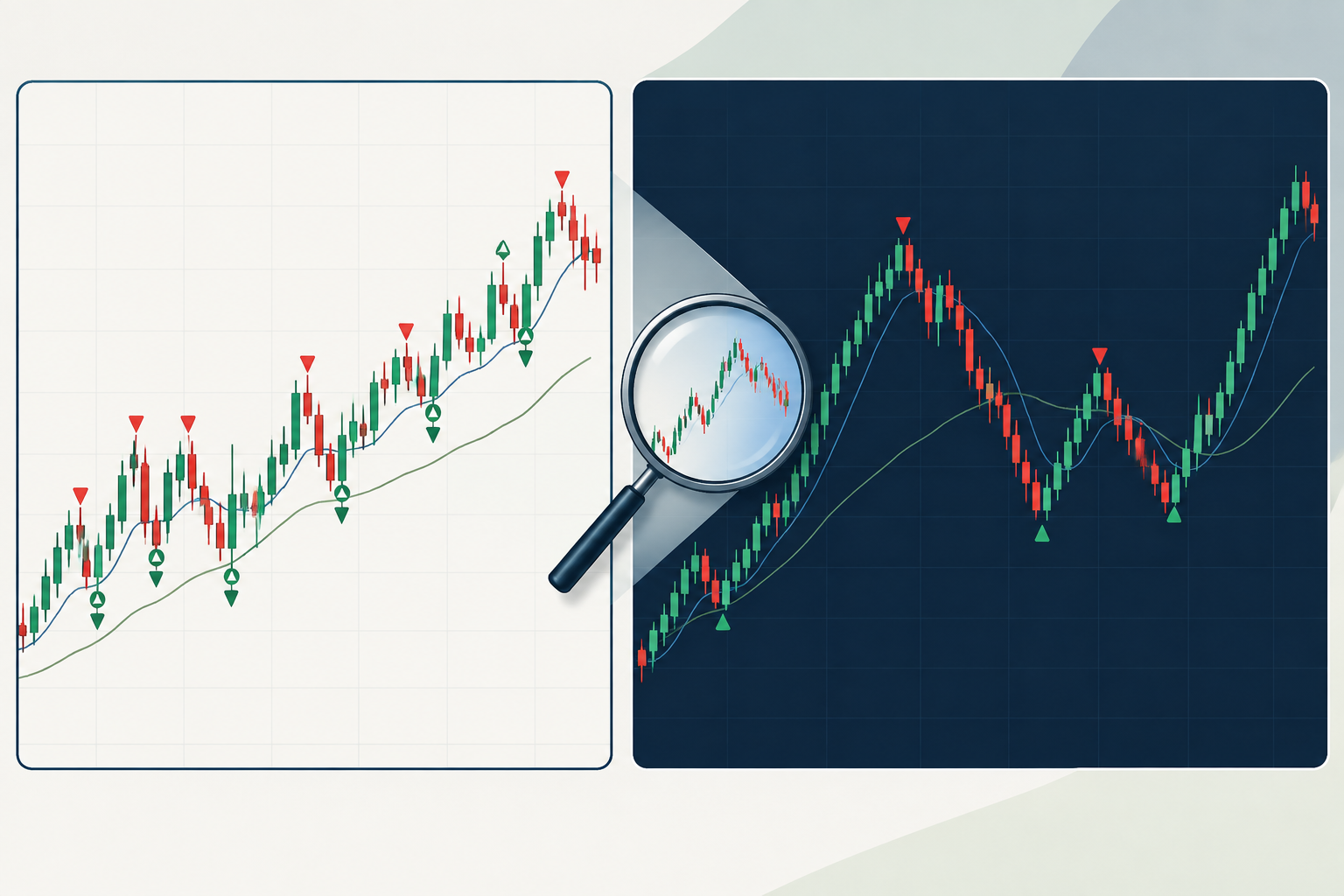
Scalping is fast trading built around small price changes, frequent decisions, and controlled exits. A scalper watches the spread, meaning the gap between buying and selling quotes, because crossing it creates an immediate cost.
Scalping requires a clean setup, enough liquidity to enter and exit, and a trading platform that behaves predictably. A notification arriving during a client call is not useful execution infrastructure.
What is swing trading, and how does it work?
Swing trading works by targeting a portion of a broader move rather than every small fluctuation. Technical analysis helps a trader identify entry and exit levels, often using trend direction and support and resistance.
Moving averages smooth recent prices. Support marks an area where buying previously appeared. Neither guarantees that the next trade works.
Swing strategies are medium-term relative to scalping, but they remain active speculation rather than a substitute for long-term investing.
Timeframes and trade duration compared
For scalp trading vs swing trading, use the table as a scheduling guide, not a promise about activity or returns. Holding periods follow Schwab’s explanation; activity varies by strategy.
| Decision | Scalping | Swing trading | Day trading |
|---|---|---|---|
| Holding period | Seconds or minutes | Days or weeks | Within the session |
| Weekly activity | Potentially frequent | Usually less frequent | Strategy-dependent |
| Screen attention | Continuous while active | Scheduled reviews plus alerts | Active session monitoring |
| Cost drag | Repeated execution costs | Execution plus possible financing | Depends on turnover |
| Tools needed | Fast order controls and quotes | Charts, screener, calendar, alerts | Charts and reliable order controls |
| Schedule fit | Protected screen sessions | Predictable review windows | Dedicated session availability |
How much time does each style really take per day?
Scalping requires continuous attention while positions are open; swing trading can often be managed through planned reviews. There is no universal daily minimum because workload changes with the instrument, strategy, and number of positions.
How much attention does scalping require?
A scalping session includes preparation, live execution, and reviewing completed trades. Counting only the minutes spent holding positions understates the job.
Reading the tape means watching executed transactions and order behavior. That information changes quickly. Scalping while answering work messages creates delayed decisions precisely where delay hurts.
For scalp trading vs swing trading, test this constraint: Could you ignore your phone and work inbox throughout trading? If not, scalping is a poor fit.
How much attention does swing trading require?
A swing trader can perform chart analysis outside the session, set alerts, and review open positions at planned intervals. Swing strategies still require monitoring around earnings and other scheduled events.
Build the watchlist before work or after dinner. Record the setup, invalidation level, and planned exit before entering.
Use the guide to finding stocks for swing trading to make preparation repeatable. In scalp trading vs swing trading, fewer interruptions matter more than owning extra screens.
Which style fits people with a full-time job?
Swing trading is usually the stronger fit for people whose employment prevents continuous monitoring. The trade-off is overnight exposure: a position can move sharply while you cannot act.

A remote employee with constant calls has a different trading schedule from a nurse working evening shifts. Being near a computer does not mean being available to manage a position.
Choose swing strategies when you can complete regular reviews and accept overnight uncertainty. Choose scalping only when you have protected trading sessions and can stop before work takes over.
Risk, stress, and capital requirements
Scalping compresses decisions and can encourage overtrading. Swing positions create a different pressure: waiting through pullbacks without abandoning the original plan.
Getting stopped out hurts either way. Revenge trading, entering again to recover a loss rather than because the strategy calls for it, makes that pain expensive.
For scalp trading vs swing trading, separate account eligibility from an affordable loss budget. The regulatory floor is not a recommended account size.
Regulatory change: the old $25,000 minimum. The former pattern-day-trader rule carried a $25,000 minimum-equity requirement. FINRA’s new intraday framework, effective June 4, 2026, replaces it. Check FINRA Notice 26-10 before funding.
Implementation data point: October 20, 2027. Firms have a transition window, so September 2026 access can depend on the broker’s implementation. Ask which framework your account currently follows. FINRA’s notice explains the phase-in.
Approval data point: April 14, 2026. The SEC approved the replacement framework on this date. Approval does not mean every brokerage switched immediately. See the SEC release and .
What is the minimum account balance for scalping?
There is no single worldwide minimum for scalping. Country, instrument, account type, and house margin rules determine eligibility.
For U.S. securities, ask about intraday margin monitoring, cash settlement restrictions, and forced liquidation. FINRA’s September 2026 explanation discusses the new controls.
Trading style
Scalp or Swing Style Quiz
A few quick questions on your schedule and temperament, then your leaning.
Educational only, not financial advice. A leaning is a starting point for a written plan, not a verdict on profitability.
How does scalping compare with other trading strategies?
Day trading provides a broader intraday approach, while position trading and index investing reduce turnover and monitoring demands. Options income introduces separate obligations and should not be treated as a low-effort replacement.
In scalp trading vs swing trading, consider these alternatives:
- Day trading: Positions close within the session, but they need not target tiny moves. It suits a trader with dedicated screen access.
- Position trading: Holds a broader thesis for longer. It suits patient investors who can tolerate extended drawdowns.
- Index investing: Suits someone who wants diversified exposure without managing frequent entry decisions.
- Options income: Requires knowledge of assignment, capped gains, and contract obligations. Premium received is not free money.
Is scalping better than day trading?
Scalping is a form of day trading, so the useful comparison is fast scalping versus slower intraday strategies. Scalping gives less room for distraction and makes small execution differences more important.
For employed traders considering scalp trading vs swing trading, slower intraday trading still requires availability. A longer chart interval does not grant permission to ignore an open position.
Can you combine scalping and swing strategies?
Yes, but maintain separate rules and records. A failed scalp must not become a swing position because accepting the loss feels unpleasant.
Judge each trading strategy independently with the guide to backtesting without fooling yourself. Combining unproven strategies usually makes analysis harder.
How do costs and taxes differ between scalping and swing trading?
Scalping repeats execution costs more often; swing trading can add overnight financing and event exposure. Tax treatment depends on your jurisdiction, instrument, and circumstances, not the label you give your trading.

A zero-commission trade can still incur a spread, slippage, exchange charges, or borrowing costs. Slippage means the execution price differs from the expected price.
For scalp trading vs swing trading, calculate results after every cost. Swing strategies often generate fewer transactions, but fewer trades do not automatically mean better returns.
Which is more profitable, scalping or swing trading?
Neither style is inherently more profitable. Net results depend on average wins, average losses, frequency, and execution costs.
Scalping can produce frequent small gains and still lose money after occasional larger losses. Swing strategies can tolerate a lower win rate if winning positions sufficiently outweigh losing ones. Risk-reward describes that relationship, not a promised outcome.
Use the trading expectancy calculator with your own records. For scalp trading vs swing trading, compare net results alongside hours spent and worst drawdown.
What tax records should you keep?
Keep dates, proceeds, costs, financing charges, and account statements. Do not assume holding a position overnight creates favorable tax treatment.
High turnover increases recordkeeping work. Local rules can affect loss deductions and how trading activity is classified. Get jurisdiction-specific advice before building strategies around a tax assumption.
What equipment and platforms does a scalper need?
A scalper needs dependable quotes, responsive order controls, stable internet, and a tested exit process. A swing trader usually gains more from a useful screener, alerts, and an earnings calendar than from another monitor.
For scalp trading vs swing trading, buy tools that solve your actual constraint.
A screener narrows a large stock universe using filters. A scanner flags developing conditions. An alert tells you a condition occurred; it does not confirm that an order filled.
Compare day trading tools with swing trading tools. FullStack Alpha, sometimes searched as “full stack alpha,” helps readers assess those categories rather than promising winning trades.
Is scalping worth it for beginners?
Scalping is usually a poor first live strategy for someone learning while employed. Fast feedback is useful, but rushed execution and repeated costs can make tuition expensive.
Paper trade it first. Simulation helps test order handling, although simulated fills cannot fully reproduce live execution.
Swing trading also requires practice and technical analysis. Start with a process you can explain before adding automation.
Top 5 features that decide scalp trading vs swing trading
- Holding period. Seconds or minutes for a scalp; days or weeks for a swing trade.
- Attention. Scalping needs continuous monitoring while positions are open; swing trading runs on scheduled reviews plus alerts.
- Cost drag. Small scalping targets make spreads, slippage, and repeated execution costs expensive.
- Overnight gap risk. A swing position can move past its planned exit while you cannot act.
- Tools. Scalpers need fast order controls and dependable quotes; swing traders get more from a screener, alerts, and an earnings calendar.
FAQ: scalp trading vs swing trading
These answers address profitability, legality, and practical limits. For scalp trading vs swing trading, judge the process against your schedule rather than against someone else’s screenshot.
Which type of trading is most profitable?
No trading category reliably ranks as most profitable for every participant. Profit depends on execution, costs, sizing, and whether a repeatable advantage survives changing conditions. In scalp trading vs swing trading, compare net results and drawdowns over a useful sample, not a winning afternoon. Swing strategies still face failed setups.
How profitable is scalp trading?
There is no defensible universal scalp-trading profit rate. Small targets make spreads, slippage, and mistakes important, while frequent trades can multiply both costs and opportunities. For scalp trading vs swing trading, demand records that include losing sessions and all expenses. Intraday access becoming easier does not establish profitability.
Is scalp trading illegal?
Scalping as a holding-period strategy is generally legal, but applicable rules depend on jurisdiction, instrument, and broker terms. Manipulation remains a separate issue. U.S. securities traders must follow their broker’s current margin and account restrictions. The 2026 framework change alters intraday eligibility, not the need to comply with trading rules.
Is scalping riskier than day trading?
Scalping belongs within day trading, so compare scalping with slower intraday approaches. Scalping often increases execution sensitivity and decision pressure, while longer intraday positions may experience larger moves. Neither has a fixed safety ranking. Position size, liquidity, exit discipline, and costs determine much of the exposure.
What is the 2% rule in swing trading?
The 2% rule is a voluntary sizing convention that limits the planned loss on a position to that share of account equity. It is not a regulatory requirement or a guaranteed loss ceiling. Gaps can exceed the planned exit, and correlated positions can create combined exposure.
What is the difference between scalp and swing trading?
Scalp positions target short intraday moves; swing positions target moves unfolding across days or weeks. The practical difference in scalp trading vs swing trading is continuous attention versus scheduled management with overnight exposure. Neither approach removes the need for an exit plan, controlled sizing, and cost-aware execution.
Is scalping or swing trading better for employed traders?
Swing trading usually fits employed traders better because preparation and reviews can happen outside work hours. That flexibility comes with overnight gaps and slower feedback. In scalp trading vs swing trading, choose scalping only when work leaves an uninterrupted session and you have tested your execution process.
How long should you hold a swing position?
Hold a swing position while its setup remains valid and the planned exit conditions have not occurred. Typical holding periods are days or weeks, but a calendar target should not override a broken setup. Review earnings exposure before entering and avoid converting an unsuccessful short-term position into an indefinite investment.
Conclusion: choose a trading routine you can keep
For a trader with a day job, start by testing a swing routine unless you can protect uninterrupted intraday sessions. Scalp trading vs swing trading should be decided by execution quality and available attention, not boredom at work.
Before the next session, write your review window, maximum planned loss, and exit rules. Use a swing position-size planner before placing an order.
Share that written plan with an accountability partner. A trading routine that survives your actual calendar beats one that works only during vacation.
References
These sources support the definitions and strategy discussion above; regulatory links appear beside the relevant claims. Source dates have not been changed to match the article’s update date.
Swing Trading Strategies - https://www.schwab.com/learn/story/swing-trading-strategies
Swing Trading Strategies - https://www.tmgm.com/en/academy/trading-academy/swing-trading-strategies
Swing Trading - https://www.infinox.com/global/en/swing-trading/
Sec Removes Day Trading Limits For Small Investors - https://journalrecord.com/2026/04/16/sec-removes-day-trading-limits-for-small-investors/
Swing Trading - https://www.elearnmarkets.com/school/units/swing-trading
Swing Trading A Beginners Guide - https://www.luxalgo.com/blog/swing-trading-a-beginners-guide/
Match your routine to a tool category before paying for another subscription. Browse 200+ tools in the FullStack Alpha directory.
Affiliate disclosure: FullStack Alpha may earn a commission from qualifying purchases through affiliate links.