Best Options Trading Platform 2026: 7 Compared on Fees
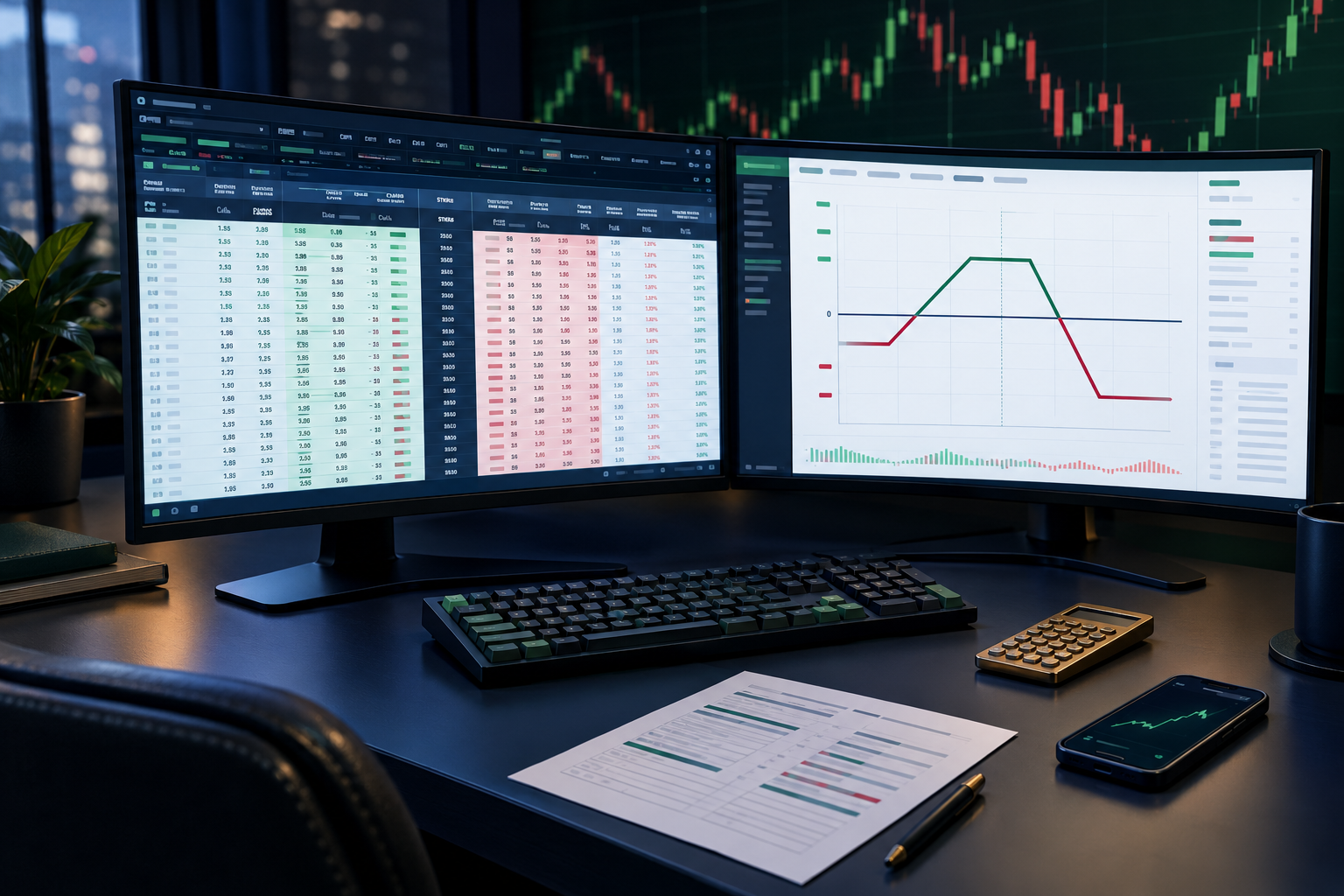
tastytrade is the best options platform for most active retail traders because its $10-per-leg commission cap means size stops costing you more, and it's built by people who trade options rather than people who sell mutual funds.
Quick Answer
If you trade multi-leg options in size, tastytrade wins on cost: $1 per contract to open, $0 to close, capped at $10 per leg. If you want the deepest analysis tools for free, Schwab's thinkorswim at $0.65 per contract is still the reference standard. If you trade small and often, Robinhood's $0 commission and $0 per-contract structure is genuinely the cheapest sticker price in the industry. And if you're a high-volume trader who cares about routing and margin rates more than the app's dark mode, Interactive Brokers tiered pricing goes lower than anyone.
Everything after this is the math and the tradeoffs.
Searching "best trading platform options"? Start with these key takeaways
- tastytrade caps equity options commissions at $10 per leg. A 50-contract order costs $10 to open and $0 to close. At $0.65 per contract, that same round trip runs $65.
- Robinhood and Webull charge $0 commission and $0 per contract on US equity options. You still pay pass-through regulatory and exchange fees, which are fractions of a cent to a few cents per contract.
- $0.65 per contract is the industry default, used by Schwab, Fidelity, and E*TRADE. E*TRADE drops to $0.50 for traders who place 30 or more trades per quarter.
- Interactive Brokers fixed pricing is $0.65 per contract with a $1 order minimum. Its tiered plan scales down with monthly volume, with exchange fees passed through separately.
- One cent of price improvement per contract equals $1, because options carry a 100-share multiplier. Your fill quality matters more than your commission on any liquid contract.
- Index options are priced differently everywhere. tastytrade charges $1.25 per contract to open on index products with no cap, and several $0-commission brokers add a per-contract fee for them.
- Options approval levels (usually 1 through 4) gate what you can trade. Selling naked calls or trading spreads in an IRA depends on the broker's approval desk, not on the fee schedule.
How did we pick the best trading platform for options?
We ranked on four things that change your P&L, and ignored everything that changes your feelings: all-in cost per contract, options-specific analysis tools, options chain usability, and how hard it is to get the approval level you actually need.
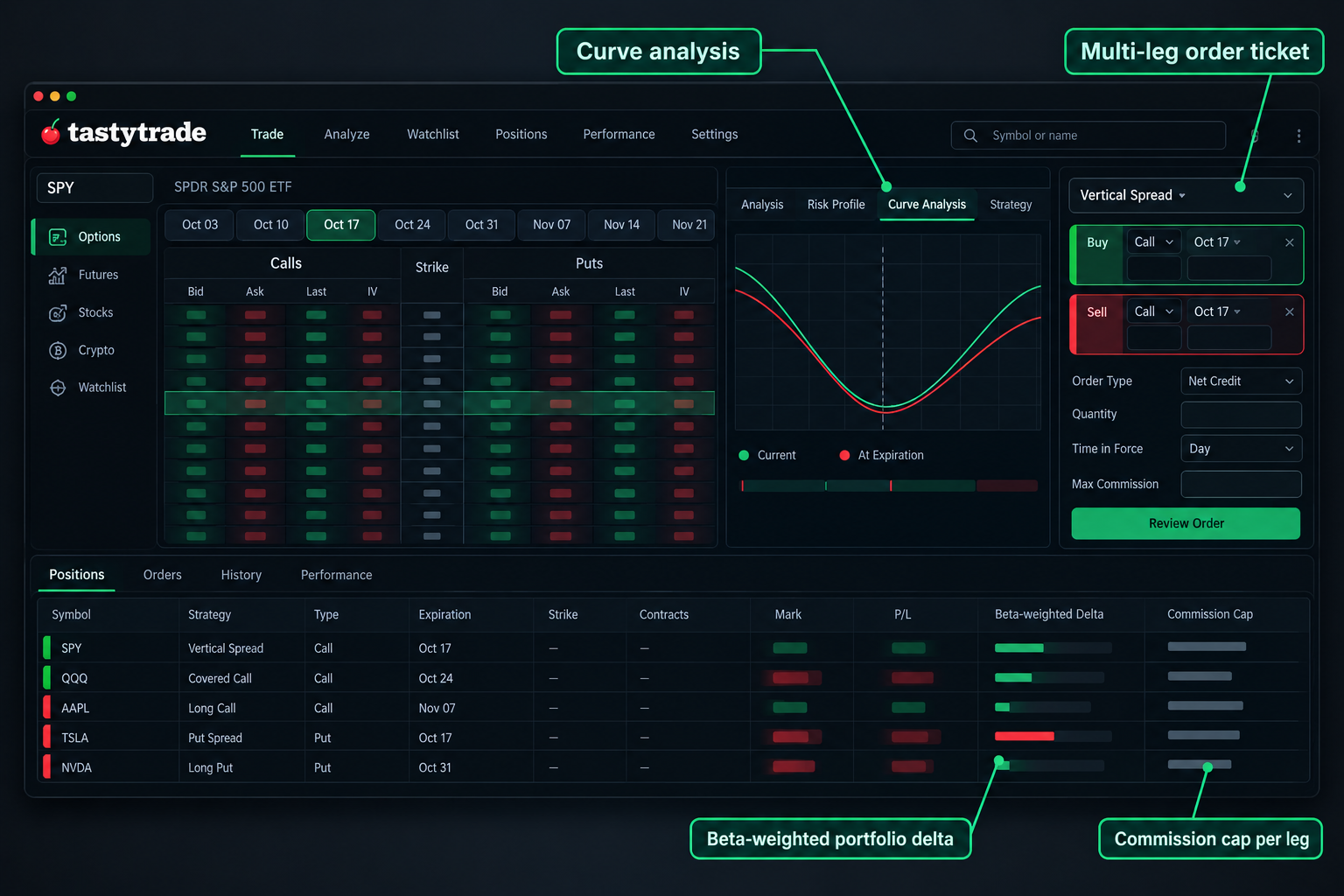
Here's the screening process:
- All-in cost, not headline commission. Commission plus clearing plus exchange plus regulatory fees, and whether there's a cap. A broker advertising $0 that routes you into a two-cent-wider fill is charging you more than a broker at $0.65.
- Options analysis tools that exist inside the platform. Risk profile graphs, implied volatility and skew data, probability of expiring in the money, and beta-weighted portfolio delta. If you need a $79 subscription to see what your position does at expiration, that's part of the cost.
- Chain quality. Can you see all expirations at once, filter strikes, load a four-leg order from the chain in one action, and see Greeks without opening a second window? Greeks are just the sensitivity numbers, such as delta, which tells you how much the option moves per $1 move in the stock.
- Order routing disclosure. Every US broker publishes Rule 606 reports on where they send orders. The SEC's rule 606 framework exists precisely so you can check this rather than trust marketing.
- Approval friction. Two brokers with identical fees are not identical if one approves spreads in a Roth IRA and the other doesn't.
We left out platforms with no meaningful options analytics, and brokers with no published fee schedule you can read in under three minutes. Fee schedules change, so treat every number here as the published rate and verify on the broker's own page before you fund an account.
Best trading platform for options: the 7 picks at a glance
The seven that survived: tastytrade, Interactive Brokers, Charles Schwab thinkorswim, Robinhood, Webull, Fidelity, and E*TRADE. Each one wins a different fight.
| Platform | Per-contract fee (equity options) | Options analysis tools | Chain quality | Mobile | Approval levels | Platform cost |
|---|---|---|---|---|---|---|
| tastytrade | $1.00 open / $0 close, capped $10 per leg | Excellent (curve analysis, beta-weighted delta, IV rank) | Excellent, built for multi-leg | Strong | Tiered, spreads and naked available | $0 |
| Interactive Brokers | $0.65 fixed, $1 order min; tiered scales lower | Excellent (Risk Navigator, Probability Lab, OptionTrader) | Very good, dense | Good, steep curve | 1 through 4 | $0; market data subscriptions extra |
| Schwab thinkorswim | $0.65 | Best in class (Analyze tab, thinkScript, paperMoney) | Excellent | Excellent | 0 through 3 plus spread tiers | $0 |
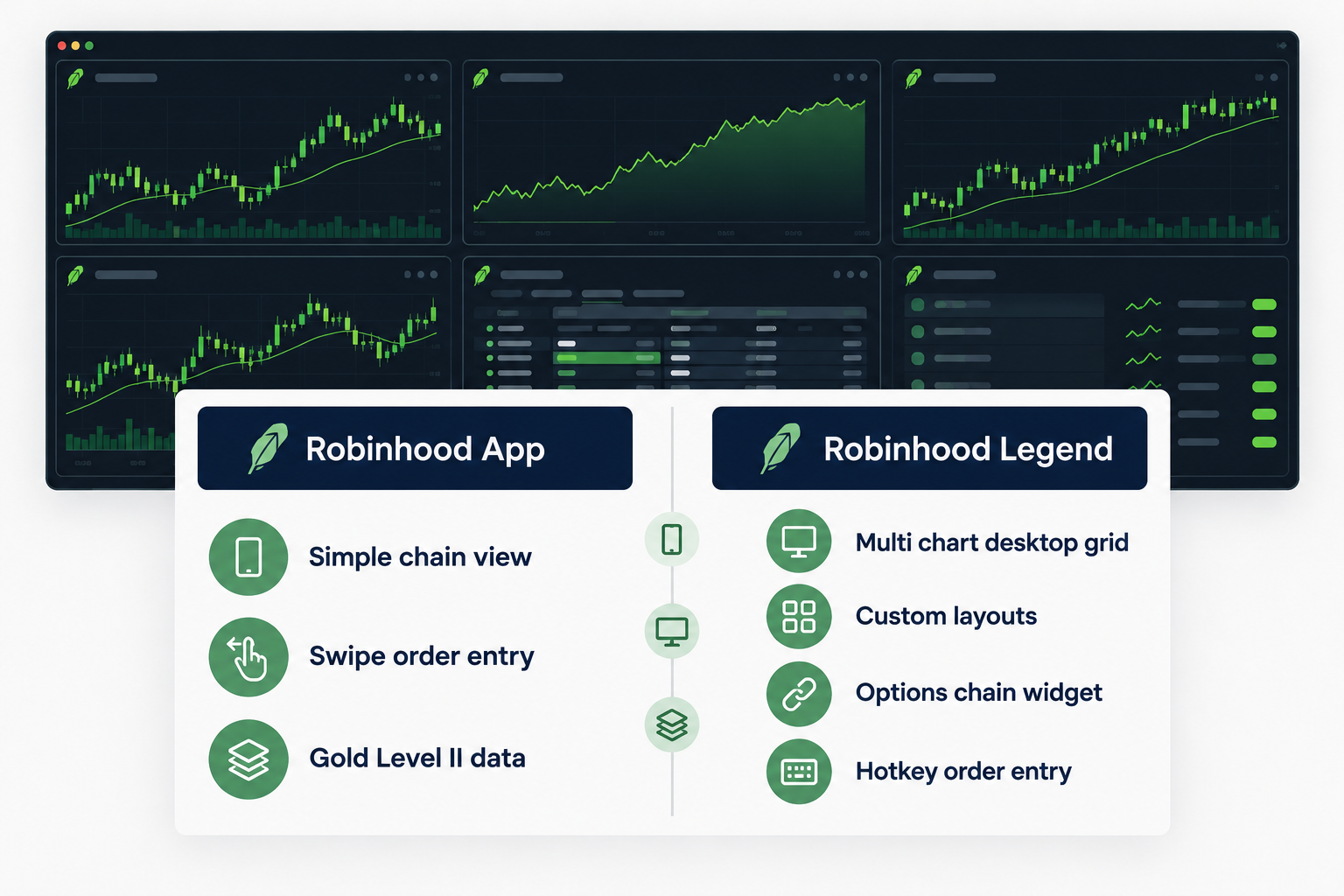
| Robinhood | $0 commission, $0 per contract | Basic in-app; Legend desktop adds charting | Clean but shallow | Excellent | Level 2 and 3 only | $0; Gold $5/mo |
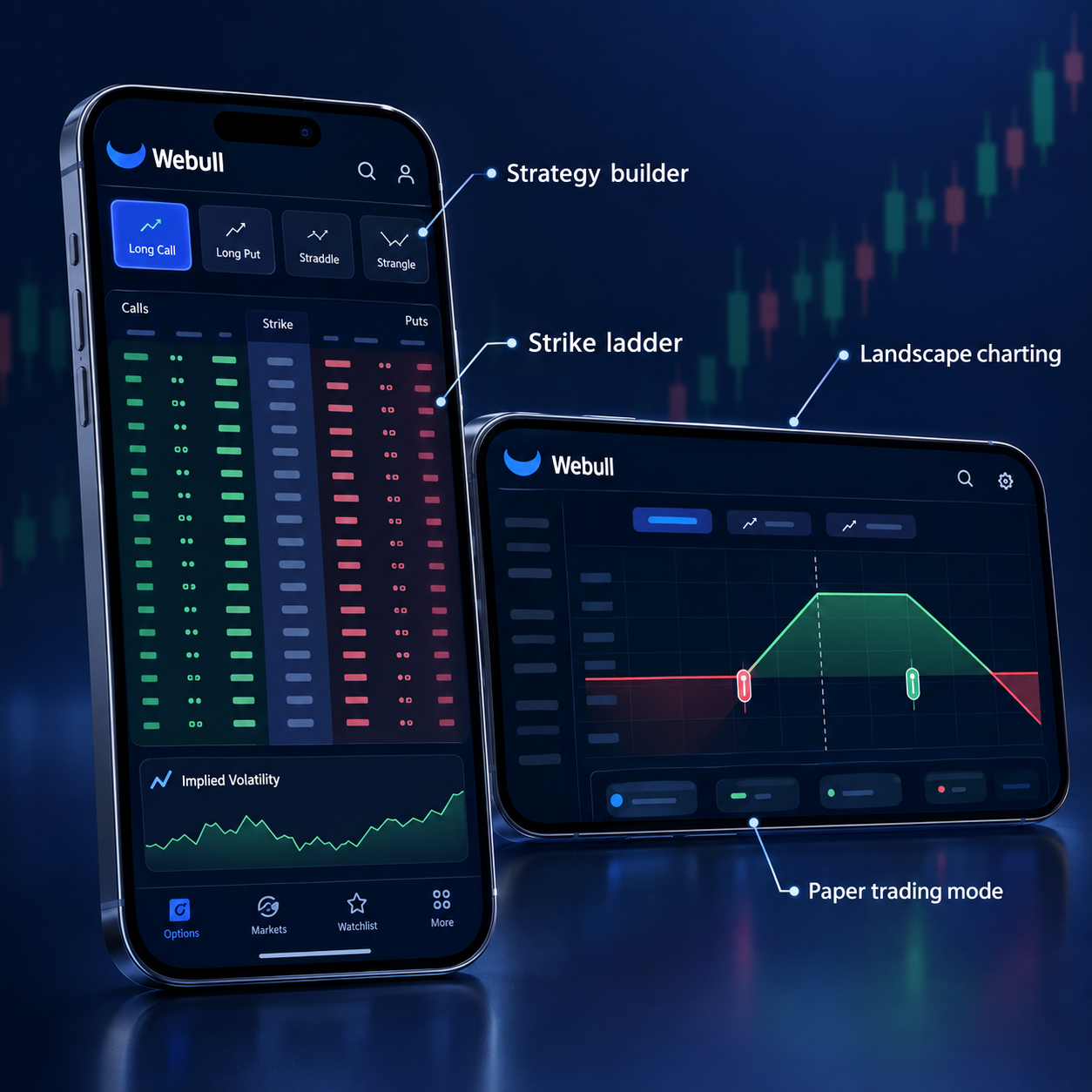
| Webull | $0 commission, $0 per contract (equity options) | Good strategy builder and payoff charts | Very good on mobile | Excellent | Tiered up to spreads | $0; some data add-ons |
| Fidelity | $0.65 | Good (Active Trader Pro, Probability Calculator) | Good, not fast | Good | 1 through 4 | $0 |
| E*TRADE | $0.65, or $0.50 at 30+ trades/quarter | Very good (Power E*TRADE spread builder) | Very good | Very good | 1 through 4 | $0 |
tastytrade: best for active multi-leg traders who trade in size
The $10-per-leg cap is the whole story here, and it only pays off once your orders get big.
Best for: traders putting on spreads, strangles, and iron condors regularly, in 10-contract clips or larger.
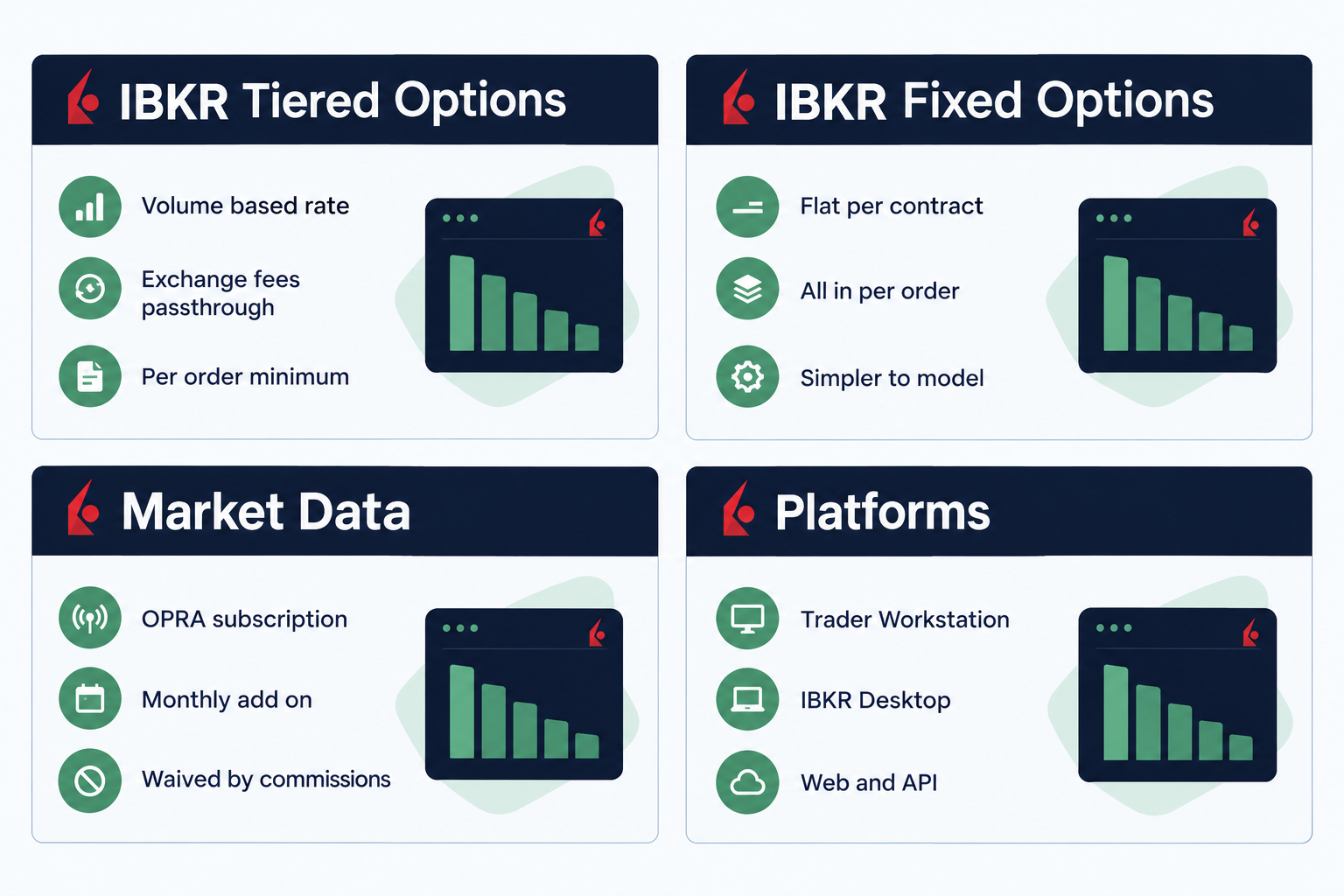
tastytrade charges $1.00 per contract to open equity options, nothing to close, and caps the commission at $10 per leg. That cap is the whole argument. Past 10 contracts on a leg, additional size is free.
Run the arithmetic on a 30-contract iron condor, which is four legs. tastytrade: $10 per leg to open, $40 total, $0 to close. A $0.65 broker: 120 contracts to open and 120 to close at $0.65 each, which is $156. That's a $116 difference on one trade. Do that twice a month and you've paid for a decent monitor.
The platform itself was built by the founders of thinkorswim, and it shows. The order ticket is genuinely multi-leg native, the curve analysis tab shows your position's payoff at any date, and beta-weighted delta tells you your whole portfolio's exposure in SPY terms. Implied volatility rank sits right on the chain, which matters because IV rank tells you whether today's option prices are expensive relative to the past year.
Pros
- $10 per leg commission cap is the cheapest structure in the industry above 10 contracts
- $0 to close, so you're never hesitating on an exit because of cost
- Analysis tools built specifically for premium sellers, not bolted on
- Futures at $1.25 per contract per side, useful if you hedge with /ES or /MES
Cons
- Index options cost $1.25 per contract to open with no cap, which is a real gap if you trade SPX
- Under 10 contracts you're paying $1 per contract, more than the $0.65 crowd and more than $0
- The house content leans heavily toward selling premium. Take the tools, form your own thesis
- Research on individual equities is thin compared with Schwab or Fidelity
The decision rule: if your typical order is 10 contracts or more per leg, tastytrade is mathematically the cheapest of these seven on equity options. Under 5 contracts, it isn't.
Interactive Brokers: best for high-volume traders and anyone trading globally
IBKR is the cheapest place here to carry positions, not the friendliest place to learn.
Best for: traders doing serious monthly volume, running margin balances, or trading non-US options markets.
IBKR fixed pricing is $0.65 per US options contract with a $1 minimum per order and exchange fees included. Its tiered plan charges less per contract as monthly volume rises, then adds exchange, clearing, and regulatory fees on top. Above a few thousand contracts a month, tiered usually wins. Below that, fixed is simpler and often cheaper after fees.
What separates IBKR isn't the commission. It's margin rates and execution. IBKR publishes its margin rates openly and they have consistently been among the lowest available to retail accounts, which matters enormously if you carry short premium against margin. Risk Navigator gives you portfolio-level stress testing across the Greeks. Probability Lab lets you compare the market's implied probability distribution against your own view, which is a more honest framing than a bullish or bearish arrow.
Pros
- Tiered commissions go below $0.65 per contract for high-volume accounts
- Lowest published margin rates among these seven, which compounds on carried positions
- Options on 30-plus global exchanges, plus stocks, futures, bonds, and FX in one account
- Risk Navigator and Probability Lab are institutional-grade and included
Cons
- Market data isn't free. OPRA and Level 2 feeds are monthly subscriptions
- Trader Workstation has the interface charm of a 1990s ERP system
- Customer service is documentation-first. You'll be reading, not talking
- Tiered pricing requires you to model exchange fees yourself to know your real cost
Edge case: IBKR is also the only pick here where a serious API and algorithmic order types are genuinely usable by a retail account. If you're building automation, start here. Our take on where automation actually helps is in the AI trading platforms breakdown.
Charles Schwab thinkorswim: best for options analysis and paper trading
If you want to see a position's risk before you pay for it, thinkorswim is the classroom.
Best for: traders who want the deepest free analysis toolkit and a paper trading environment that mirrors the real platform.
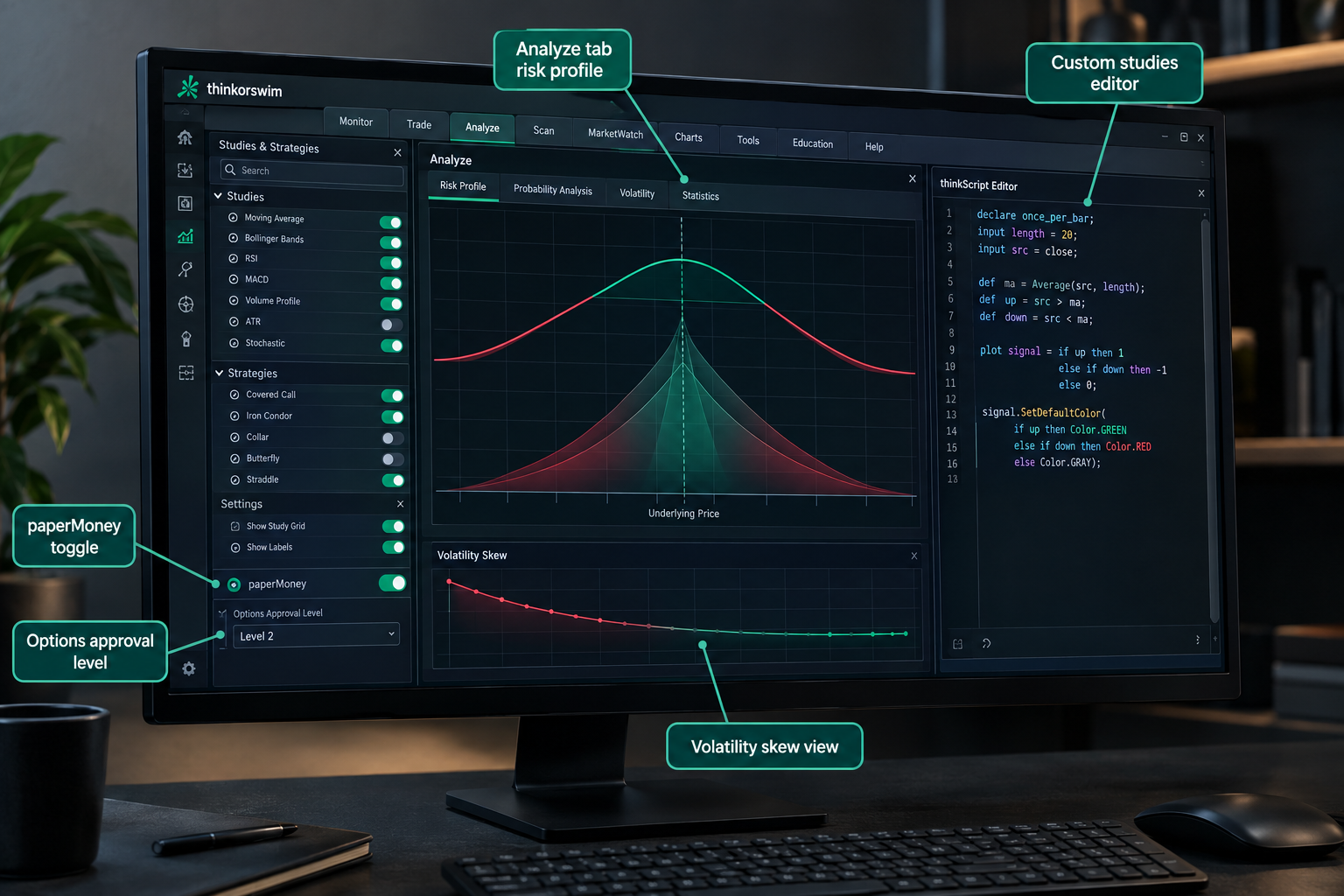
Schwab charges $0.65 per contract with no base commission, and hands you thinkorswim for free. The Analyze tab is still the best risk profile visualizer in retail trading: build any combination of legs, slide the date and volatility inputs, and see what the position does before you risk a dollar.
thinkScript, the platform's scripting language, lets you write your own studies and scans. paperMoney runs the identical platform with simulated money, which is the single most underused feature in retail trading. Paper trade it first, especially before your first short-premium position.
Pros
- Analyze tab, volatility skew views, and probability of expiring calculations all included
- paperMoney is the full platform, not a stripped demo
- Extensive free options education and a large support organization
- Excellent mobile app with a usable chain
Cons
- $0.65 per contract with no cap. A 50-contract round trip is $65
- thinkorswim is heavy. Old laptops will complain
- The Schwab account layer and the thinkorswim layer still feel like two companies
- Assignment and exercise handling is fine, but complex adjustments often mean a phone call
Common mistake: traders install thinkorswim, add 14 indicators, and never open the Analyze tab. The indicators are the noise. The risk profile is the signal.
Robinhood: best for small-size traders and the lowest sticker price
Robinhood wins on sticker price for small orders, and nearly everything else is a trade-off.
Best for: traders running 1 to 5 contracts who want zero commission and don't need deep analytics.
Robinhood charges $0 commission and $0 per contract on US equity options. You pay only pass-through regulatory and exchange fees, which are a few cents on a typical order. For someone trading two contracts at a time, no fee schedule in this comparison beats it.
Robinhood Legend, the desktop platform, closed the biggest gap in the product. You get multi-chart layouts, a real options chain widget, and hotkey order entry. Robinhood Gold at $5 a month adds Level II market data and larger instant deposits.
The honest caveat: Robinhood earns revenue from payment for order flow on options, and its options business is a large share of transaction revenue. That's disclosed, legal, and industry-standard. It also means your $0 commission is not the same as $0 cost. Check the Rule 606 reports and, more usefully, check your own fills against the midpoint.
Pros
- $0 commission and $0 per contract, the cheapest published rate here for small orders
- Legend desktop gives real charting and a chain that doesn't feel like a toy
- Fastest account opening and funding experience of the seven
- Gold at $5/mo is cheap for Level II data
Cons
- No Level 4 approval. No naked calls, and the approval process is opaque
- Analysis tooling is thin. No risk profile graph anywhere near thinkorswim's
- Index options and futures carry their own per-contract costs, so check the current schedule
- The interface has historically nudged users toward more trading, not better trading
The decision rule: choose Robinhood if your average order is under 5 contracts and you do your analysis elsewhere. If you need the broker to be your analysis tool too, look at thinkorswim or tastytrade.
Webull: best for mobile-first options traders
Webull pairs Robinhood-style $0 pricing with a better strategy builder in your pocket.
Best for: traders who place most orders from a phone and want $0 per-contract pricing with better tooling than Robinhood.
Webull charges $0 commission and $0 per contract on US equity options, with regulatory and exchange fees passed through. Index options carry a per-contract fee, so verify that line if SPX or XSP is your market.
The mobile app is the best of these seven for options specifically. The strategy builder covers verticals, calendars, condors, and butterflies with a payoff diagram that updates as you drag strikes. Webull also gives you paper trading on mobile, which almost nobody else does properly.
Pros
- $0 per contract on equity options with a genuinely capable mobile chain
- Strategy builder with live payoff diagrams on the phone
- Paper trading available on mobile and desktop
- Free Level 2 data promotions are common, then cheap monthly
Cons
- Index options are not free. That fee is easy to miss
- Research is shallow. Fundamentals are basic and analyst data is limited
- Desktop platform is capable but less mature than thinkorswim or IBKR
- Support is chat-first and slow when something breaks mid-position
Edge case: if your strategy depends on precise fills on wide-spread contracts, mobile-first is a liability. A 20-cent-wide bid-ask means every order you fire off between meetings costs you $20 per contract in slippage risk. That dwarfs the commission you saved.
Fidelity: best for investors who trade options alongside a long-term portfolio
Fidelity is an options desk bolted onto a retirement account, not the other way around.
Best for: people whose main account is a retirement or long-term brokerage account, who trade options on the side.
Fidelity charges $0.65 per contract. Active Trader Pro is free, includes a probability calculator and a decent multi-leg ticket, and the research library is the strongest here for actual company analysis.
Fidelity's notable structural point: it does not accept payment for order flow on equity orders, and its disclosures show it does receive payment on options orders. That asymmetry is worth knowing rather than assuming.
Pros
- Best-in-class research and fixed income alongside a competent options desk
- Active Trader Pro is free with no volume requirement
- Options in IRAs, including spread approval, is handled well
- Strong customer service with actual humans, including local branches
Cons
- $0.65 per contract, uncapped. Size gets expensive fast
- Active Trader Pro is dated compared with thinkorswim's Analyze tab
- No futures, so no /MES hedge against your equity delta
- Platform speed on fast tape is adequate, not quick
Choose Fidelity if: your options activity is 10 percent of your account activity and the other 90 percent is buying and holding. Don't choose it if options are your primary business.
E*TRADE: best for tiered volume discounts without a volume obsession
E*TRADE rewards steady activity: 10 trades a month earns the lower rate.
Best for: moderately active traders who place at least 30 trades a quarter and want a polished spread builder.
E*TRADE, now part of Morgan Stanley, charges $0.65 per contract and drops to $0.50 for accounts placing 30 or more trades per quarter. That's 10 trades a month, which is a realistic threshold rather than an institutional one.
Power E*TRADE is the reason to be here. The spread builder is one of the cleanest ways to construct a four-leg position from a chain, the Snapshot Analysis panel shows probability and payoff without leaving the ticket, and LiveAction scans surface unusual options volume.
Pros
- $0.50 per contract at 30+ trades per quarter, a 23 percent discount on the default
- Power E*TRADE spread builder and Snapshot Analysis are excellent
- Strong paper trading and a clean mobile implementation
- Morgan Stanley backing means deep capitalization and stable platform investment
Cons
- Still uncapped. A 50-contract round trip at $0.50 is $50
- The discount resets quarterly, so slow quarters push you back to $0.65
- Two apps (E*TRADE and Power E*TRADE) is one app too many
- Margin rates are uncompetitive versus IBKR
The decision rule: choose E*TRADE if you reliably hit 30 trades a quarter and want the Power E*TRADE spread builder. If your quarters are uneven, the discount resets and you are back at $0.65.
Cost comparer
Options Commission Cost Comparer
What does your options volume cost each month at three brokers, and which one is cheapest?
What should you look for in an options trading platform?
Look at four numbers in this order: your typical contracts per order, whether the broker caps commissions, the average bid-ask spread on the contracts you trade, and the cost of closing a position.
1. Contracts per order decides everything. Multiply your usual size by the per-contract fee, then double it for the round trip. If you trade 3 contracts, the annual difference between $0 and $0.65 is small change. If you trade 40 contracts, the difference is a car payment.
2. Caps beat low rates. A $1 rate with a $10 cap beats a $0.65 rate with no cap at any size above 16 contracts per leg. Do that division once and you'll know which side of the line you live on.
3. Closing cost is a behavior tax. When it costs money to close, traders let losers run to expiration hoping they'll come back. That is the single most expensive habit in options trading. $0-to-close pricing removes the excuse. Cut losers fast.
4. Spreads cost more than commissions on illiquid contracts. Options carry a 100-share multiplier, so a one-cent improvement on your fill equals $1 per contract. On a contract with a 15-cent spread, sloppy execution costs 15 times your $0.65 commission. Use limit orders at the midpoint and work the price. Always.
5. Approval levels are a gate, not a formality. FINRA requires brokers to assess suitability before approving options trading, and each firm sets its own tiers. Level 1 is usually covered calls and cash-secured puts. Level 2 adds long calls and puts. Level 3 adds spreads. Level 4 adds naked short options. If your strategy needs Level 3 in an IRA, confirm the broker offers it before you transfer anything.
6. Data and platform fees are real costs. IBKR market data subscriptions, Robinhood Gold at $5, Webull data add-ons. Add them to your annual commission estimate.
A practical checklist before funding:
- Write down your average contracts per order and per leg
- Multiply by the per-contract rate, round trip, and by 12 months of expected trades
- Add platform and data subscriptions
- Confirm the approval level you need is available in the account type you want
- Check the broker's most recent Rule 606 disclosure
- Paper trade the chain for two weeks before real money touches it
How does an options broker compare to flow tools, screeners and paper trading?
The best trading platform options traders overlook is the free paper account most of these brokers already include.
A broker is your execution venue. It is not your research department, and none of these seven give you institutional-grade options flow data. That's a separate purchase, and for most traders it's optional.
Options flow data services track large, unusual, or aggressive options orders and try to infer intent. Market Chameleon, Barchart's unusual options activity screens, OptionStrat, and Unusual Whales all sit in this category, typically from free tiers up to roughly $50 to $100 a month. They suit traders who already have a system and want one more input. They do not suit anyone still looking for something to tell them what to buy. Flow without context is just weather. We broke down how to read it without getting faked out in this guide to Barchart unusual options activity.
Dedicated options screeners filter by IV rank, expected move, earnings dates, and probability of profit, which most broker chains do poorly. If your entries depend on volatility conditions rather than chart patterns, a screener earns its keep faster than a flow feed. The filters that actually matter are covered in our stock options screener comparison.
Paper trading apps are the cheapest tool in trading and the most ignored. thinkorswim's paperMoney, Webull's simulator, Power E*TRADE's paper account, and IBKR's demo all cost nothing. They suit anyone who has never been assigned short stock, anyone testing a new strategy, and anyone who just had a bad month and needs to rebuild process before size. They do not replicate the emotional cost of real money, so treat the results as a mechanics test, not a profitability forecast.
AI-assisted options tools sit on top of all of this, scoring setups and flagging volatility anomalies. Some are genuinely useful. Many are a public data feed with a subscription button. We keep a running assessment in the AI options tools directory.
Top 5 features to demand in an options trading platform
- A commission cap. A $1 rate with a $10 cap beats an uncapped $0.65 rate at any size above 16 contracts per leg.
- $0 to close. It removes the cost excuse for letting losers run to expiration.
- A real risk profile tool. See your payoff at any date before you send the order, like thinkorswim's Analyze tab or tastytrade's curve analysis.
- The approval level you need. Confirm spread approval is available in your account type, especially an IRA, before you transfer anything.
- Published routing and good fills. Check the Rule 606 report, because one cent of price improvement per contract equals $1.
Options trading platform FAQ
What is the cheapest options trading platform in 2026?
For orders under 10 contracts, Robinhood and Webull are cheapest at $0 commission and $0 per contract on US equity options. For orders above 16 contracts per leg, tastytrade is cheapest because of its $10-per-leg cap.
Is $0.65 per contract a good options commission?
It's the industry default, used by Schwab, Fidelity, and E*TRADE. It's fine for small orders and expensive at size, because nothing caps it. A 100-contract round trip costs $130 at that rate.
Which options platform has the best option chain?
tastytrade and thinkorswim, for different reasons. tastytrade's chain loads multi-leg orders fastest. thinkorswim's chain connects directly to the Analyze tab so you can see the risk profile before you send the order.
Do I need to pay for options market data?
Not at Schwab, Fidelity, tastytrade, or E*TRADE, where real-time options quotes are included. Interactive Brokers charges monthly for OPRA and Level 2 feeds. Robinhood charges $5 a month for Gold, which includes Level II.
What options approval level do I need for spreads?
Usually Level 3, sometimes labeled Level 2 depending on the firm. Verticals, calendars, and iron condors all require spread approval. Selling naked calls requires the highest tier, typically Level 4, and Robinhood does not offer it.
Can I trade options in an IRA?
Yes, with limits. Most brokers allow covered calls, cash-secured puts, and long options in IRAs. Spread approval in an IRA varies by firm, with Fidelity, Schwab, and tastytrade generally accommodating it. Naked short calls are not permitted in retirement accounts.
Are index options cheaper than equity options?
No, usually the opposite. tastytrade charges $1.25 per contract to open index options with no cap, and brokers with $0 equity options pricing typically add a per-contract fee for index products. The upside is tax treatment and cash settlement, not cost.
Does commission-free options trading mean it's actually free?
No. Brokers offering $0 commissions typically earn revenue from payment for order flow, and you still pay pass-through regulatory fees. The bigger cost is fill quality: one cent of slippage per contract equals $1. Compare your fills against the midpoint, not the commission schedule.
What is the best trading platform options beginners should start on?
Schwab thinkorswim for most beginners: $0.65 per contract, the Analyze tab, and paperMoney on the full platform so you can practice first. Robinhood is cheaper for 1 to 5 contract orders, but its analysis tools are thin.
Which options trading platform is best for large multi-leg orders?
tastytrade. It charges $1 per contract to open, $0 to close, and caps commissions at $10 per leg, so a 30-contract iron condor costs $40 to open versus $156 round trip at a $0.65 broker.
Which options platform is best for trading on a phone?
Webull. Its mobile strategy builder covers verticals, calendars, condors and butterflies with live payoff diagrams, and it charges $0 per contract on US equity options.
How to make $100 a day trading options?
There is no reliable formula, and most retail options traders lose money chasing a daily target. What you control is cost, fill quality and size: use limit orders at the midpoint, cut losers fast and paper trade a setup for two weeks before real money touches it.
Do I need $25,000 to trade options?
Not to trade options. What gates you is the broker's approval level, from Level 1 covered calls and cash-secured puts up to Level 4 naked short options. The $25,000 figure comes from the pattern day trader rule on frequent day trading in a margin account, so check your broker's policy if you plan to open and close the same day.
Why do 90% of options traders lose money?
The exact share is hard to verify, but the causes are well known. Traders let losers run to expiration hoping they come back, give away money on wide bid-ask spreads, and size positions too big for their account. A cheap platform fixes none of that; a written process does.
Can you make $1000 a day with day trading?
A very small number of traders do, and most people who try lose money. Returns like that need real capital and strict risk control, and no platform or fee schedule makes it likely. Size every trade from your stop and your risk per trade, not from a daily income goal.
Final verdict: the best trading platform for options by trader type
Contracts per order decides the winner more than any feature list does.
tastytrade for active multi-leg traders at 10 contracts or more per leg. The $10 cap and $0 close is the best cost structure in retail options, and the analytics are built for the job.
Interactive Brokers for high-volume traders, anyone carrying margin, and anyone trading outside the US. Ugly, cheap, and serious.
Schwab thinkorswim for the best free analysis and paper trading, if you can live with $0.65 uncapped.
Robinhood for 1 to 5 contract orders where $0 is the point and analysis happens elsewhere.
Webull for mobile-first traders who want $0 equity options pricing with a real strategy builder.
Fidelity for long-term investors who trade options occasionally inside an account they already trust.
E*TRADE for moderately active traders hitting 30 trades a quarter who want $0.50 pricing and the best spread builder in the group.
Your next step is a 10-minute spreadsheet, not another account. Three columns: your average contracts per order, the per-contract fee at each broker, and your expected trades per year. Multiply, double it for the round trip, add data fees. The winner will be obvious, and it probably isn't the platform with the prettiest app. Then open the paper account and run your setup for two weeks before real money shows up. Fewer tabs, fewer alerts, one process you can repeat. Cut the noise, keep the alpha.
Picking a broker is one decision. Picking what runs on top of it is the next one. The FullStack Alpha directory lists 200+ AI stock tools by category and price.
Browse the directory → aistockpickerapps.com
Some links in this article are affiliate links, which may earn FullStack Alpha a commission at no cost to you.