AI ETF Screeners Compared: Best Tools for US Investors
Quick Summary: AI Stock Picker Apps is ideal for beginners and long-term investors, offering simple ETF screening focused on fund data, costs, and liquidity. Trade Ideas suits active traders with real-time scans and alerts but is more complex. The best ETF screener should prioritize fund details over signals, helping investors find ETFs based on holdings, fees, and risk factors.
Want the better AI ETF screener fast? AI Stock Picker Apps fits most US investors because it makes investment screening simpler. Trade Ideas works better for trader-style investment screening with speed and alerts. Investors often waste time on noisy rankings built for stocks, not ETFs. I review screening tools and trading workflows often, and this comparison shows which platform wins for ETF discovery, deeper investment screening, and daily use.
AI ETF Screeners at a Glance
| AI Stock Picker Apps | Trade Ideas | |
|---|---|---|
| Pricing | Varies by plan; positioned for accessible retail research | Premium subscription software |
| Best for | Investment screening and idea discovery for individual investors | Day traders and swing traders who want real-time market scans |
| Screening depth | Broad research workflow with ETF-friendly screening use cases | Very deep real-time scanning and customization |
| Ease of use | Simple, beginner-friendly interface | Powerful but more complex |
| Real-time alerts | Useful for ongoing monitoring and watchlist-style tracking | Strong intraday alerts and signal-driven scanning |
How AI Stock Picker Apps and Trade Ideas Compare
AI Stock Picker Apps
AI Stock Picker Apps fits self-directed investors who want a simple way to screen stocks and ETFs. Its angle here is broad idea discovery, beginner-friendly research flow, and practical alerts for ongoing watchlist tracking.
 Key strengths
- ETF-friendly screening
- Easy interface
- Accessible retail research
Trade Ideas
Trade Ideas leans toward active traders who need deep real-time scans and fast signals. Its role in this comparison is the advanced end of the market, with strong intraday alerts and heavier customization.
 Key strengths
- Deep real-time scanning
- Strong alerts
- Built for day and swing trading
How Each Platform Handles ETF Screening
Some platforms help you find ETFs. Others push you toward trade timing. That split matters. The SEC notes ETFs are pooled investment products with different costs, risks, and holdings, so a screener should surface those facts first, not just chart signals on Investor.gov. Good ETF discovery starts with asset class, fees, holdings, overlap, and liquidity. Trade setup tools lean harder on momentum, alerts, and entries.

AI branding means little if the screening logic is weak. The better test is simple:
- Does it filter by holdings, cost, and fit?
- Does it show liquidity beyond raw volume?
- Does it explain why an ETF matched?
Low trading volume alone does not define ETF liquidity, because underlying holdings matter too, as Natixis explains in its ETF liquidity note.
Also Read: https://aistockpickerapps.com/blog/composer-trade-review-can-ai-build-a-trading-algo-you-d-run
Usability, Alerts, and Research Workflow
Speed for active traders
Active traders need fast scans, clean layouts, and alerts that fire before the move is gone. The best AI ETF screeners cut clicks and let you sort by volume, momentum, spreads, and fund type in seconds. Alerts matter too, but they should support decisions, not replace them. FINRA says leveraged and inverse ETFs are built for short time frames, so speed only helps if the tool also shows risk clearly.
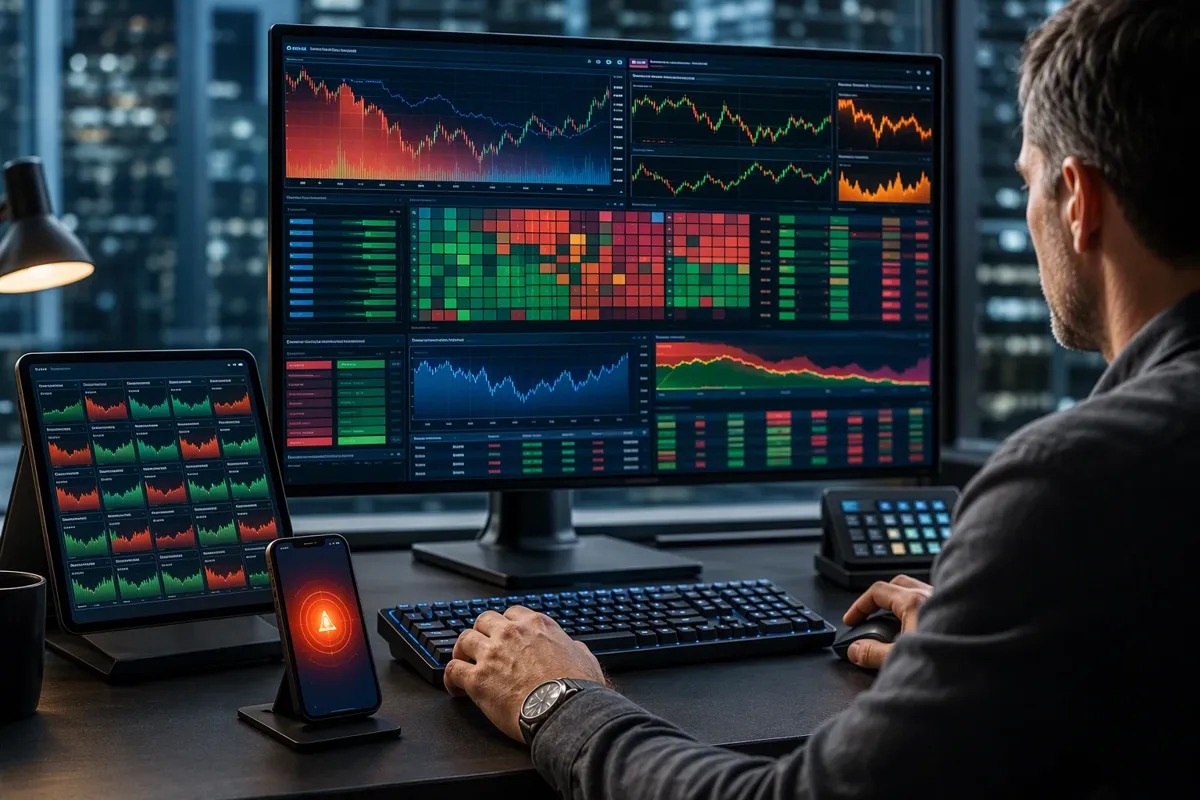
Fast alerts are useful. Blindly following them is not.
Clarity for longer-term investors
Longer-term investors need the opposite setup: fewer flashing signals, more fund facts. A good workflow starts with screening for expense ratio, holdings, sector weight, and strategy, then moves to issuer research and fit with your plan. The SEC ETF bulletin notes some ETFs are simple, while others use complex strategies that can be harder to understand.
Also Read: https://aistockpickerapps.com/blog/danelfin-vs-zen-ratings-vs-kavout-which-ai-stock-score-wins
Which Should You Choose for Your Investing Style?
Most ETF investors should pick a screener that stays simple: fund focus, low fees, good liquidity, and clear holdings data. That fits long-term investors, swing traders, and most advisors. ETFs can offer diversification, but not all do, so your tool should make sector weight, spread, and expense ratio easy to compare, as noted by Investor.gov’s ETF guide.
If a screener pushes hot signals but hides ETF costs and liquidity, skip it.
Active traders need faster scans, alerts, and intraday filters. Trade Ideas fits that style better than a basic research workflow. Still, speed brings more risk. If you day trade often in margin, the SEC says pattern day traders generally need $25,000 in the account under the rule threshold at Investor.gov.
Compare smarter, not louder. Visit AI Stock Picker Apps for unbiased AI ETF screener reviews, side-by-side tool comparisons, and clearer next steps.
Frequently Asked Questions
Q1: Compare leading AI ETF screener platforms?
Trade Ideas is strongest for active traders. TradeAlgo leans toward signal-driven workflows. Review sites like daytradingz, moneyflock, and wrtrading help with broad comparisons, but ETF investors should check fund filters, liquidity data, and US market coverage first.
Q2: Are AI ETF screeners good for long-term investors?
Yes, if you use them to sort funds by cost, holdings, sector mix, and trend. They help narrow choices fast. They should not replace your own check on fees, tax fit, and portfolio overlap.
Q3: What features matter most in an AI ETF screener?
Focus on ETF-specific filters:
- expense ratio
- assets under management
- average volume
- issuer
- sector exposure
- holdings overlap
- dividend yield
- technical trend signals
Generic stock alerts alone are not enough for ETF research.
Conclusion
The best AI ETF screener helps you narrow choices fast, not think for you. Focus on fund data, costs, and risk, since the SEC notes some ETFs are complex, and ETF growth keeps screening more important.