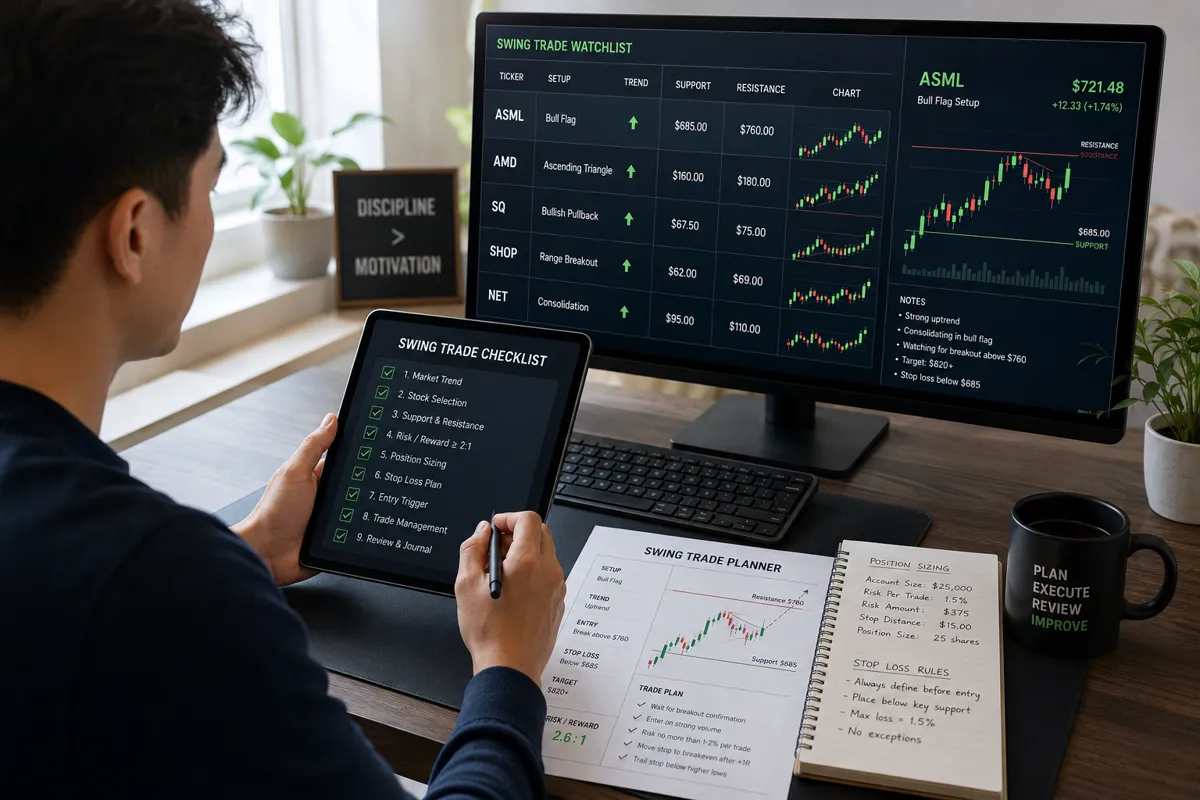
I Used ChatGPT for Stock Analysis for Two Weeks...Then I Found the Tools Built for It
Last updated: June 17, 2026
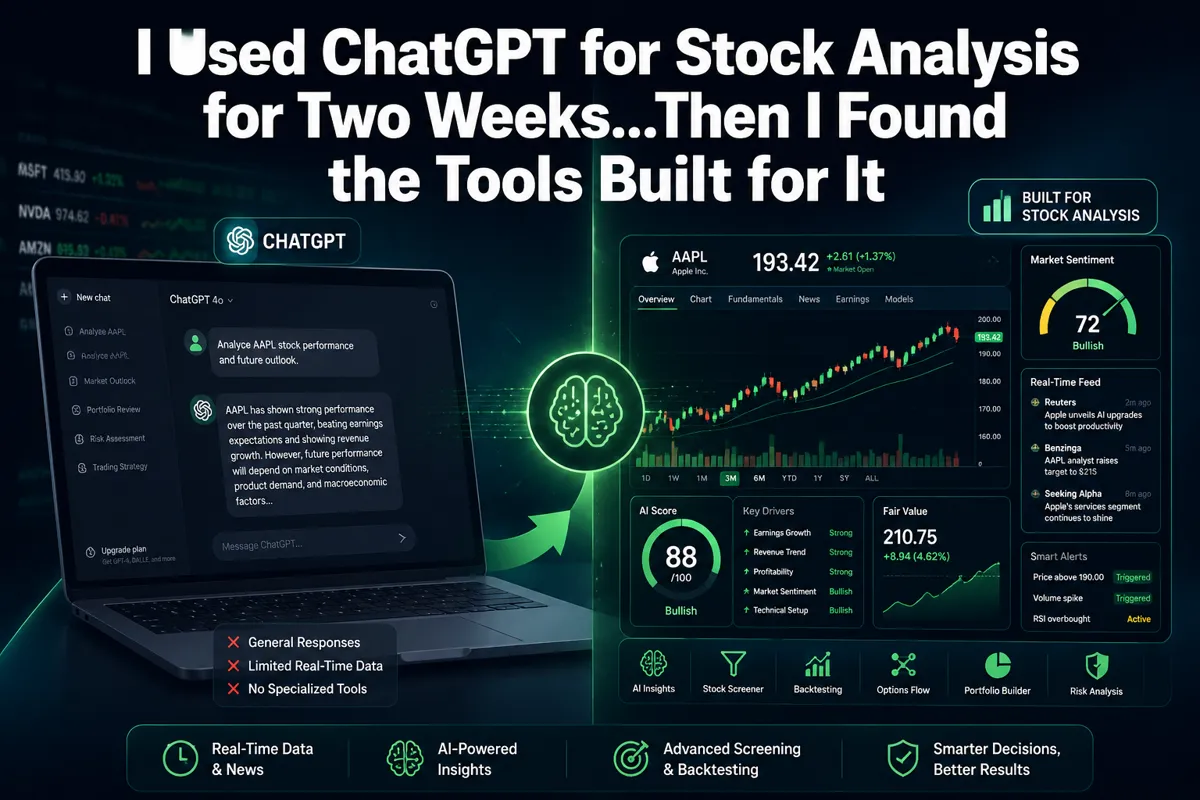
Quick Answer: ChatGPT is a capable general-purpose AI, but it has no live market data, no real-time price feeds, and no financial modeling infrastructure. Using it as your primary stock research tool is like using Google Maps to perform surgery — technically involves a computer, but wrong tool entirely. Purpose-built platforms like Koyfin, Danelfin, and Magnifi do what ChatGPT cannot: pull verified financial data, score stocks with finance-specific models, and connect directly to the numbers that matter.
Key Takeaways
- ChatGPT is useful for learning concepts and drafting research frameworks, but it cannot access live stock data or verify current financials.
- The limits of ChatGPT for stocks become obvious fast: no real-time prices, potential for outdated fundamentals, and zero position-sizing or risk-reward logic built in.
- Purpose-built AI tools like Koyfin (financial data), Danelfin (AI scoring), and Magnifi (finance-trained conversational AI) are designed specifically for stock analysis.
- Paid stock analysis tools range from free tiers to $50-$200/month for professional-grade platforms, and many are worth it if you're actively trading.
- The biggest mistake traders make is using general AI for specific financial decisions without verifying the data against a live source.
- Signal over noise means picking the right tool for the right job, not stacking more tools on top of a broken process.
- Beginners should start with one purpose-built tool, learn it deeply, and paper trade it first before committing real capital.
I Used ChatGPT for Stock Analysis for Two Weeks...Then I Found the Tools Built for It
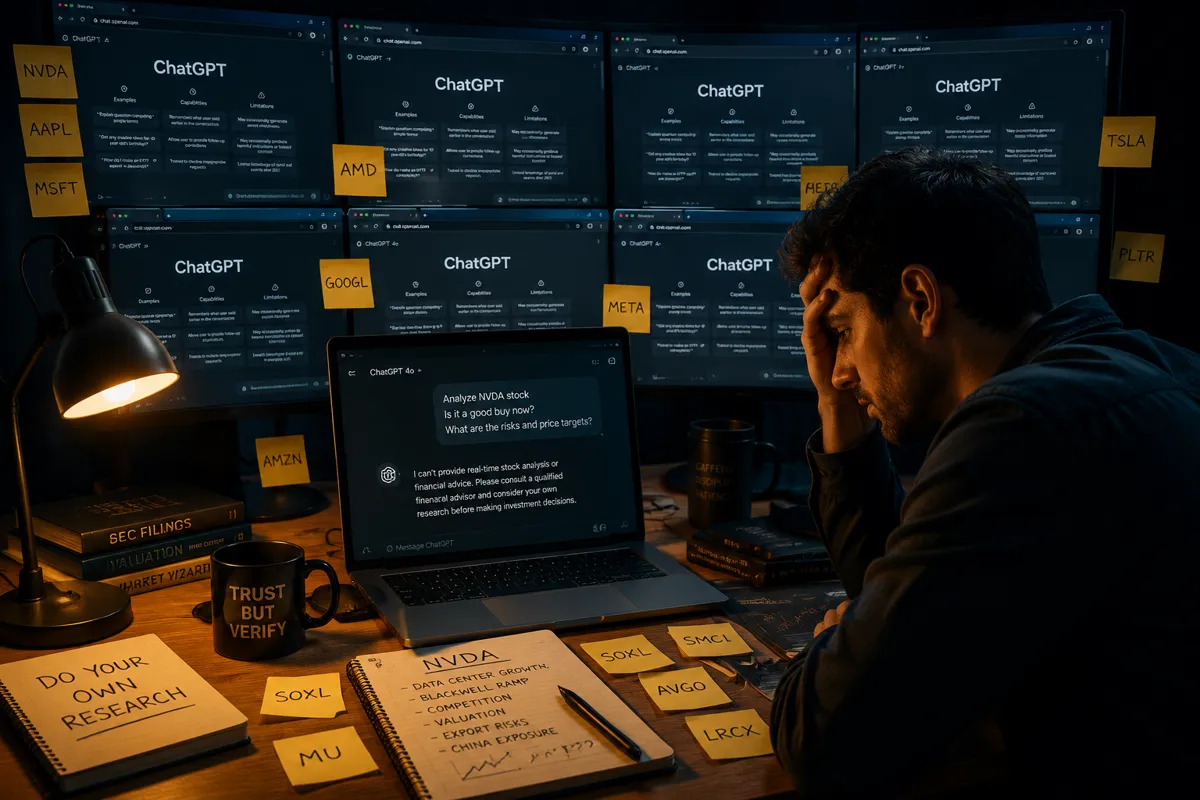
Two weeks. That's how long it took me to realize I was using a Swiss Army knife to do a surgeon's job.
I started using ChatGPT for stock analysis the way most retail traders do — with genuine optimism and a list of prompts I'd cobbled together from Reddit threads. I asked it to summarize earnings reports. I asked it to compare valuation multiples. I asked it to help me build a watchlist. It was articulate, fast, and confident.
It was also working from data that could be months or years old, had no access to current price action, and couldn't tell me whether a stock was in a tight consolidation or a dead cat bounce. It gave me the shape of analysis without the substance.
Here's the thing nobody tells you upfront: ChatGPT for stock analysis is like hiring a brilliant intern who read every finance textbook but has never seen a live chart. They can explain what a P/E ratio is. They cannot tell you whether the stock is overextended right now, today, at this price.
That's the gap. And it's a big one.
Is ChatGPT Actually Good for Stock Research?
ChatGPT is genuinely useful for stock research in a narrow set of situations. It excels at explaining concepts, helping you structure a research framework, summarizing publicly available information, and drafting chatgpt stock analysis prompts you can refine. For learning how to use chatgpt for stock analysis as a study tool or a thinking partner, it's solid.
Where it falls apart is the moment you need current, verified financial data.
ChatGPT's training data has a knowledge cutoff. Even with browsing enabled, it's not pulling live earnings, real-time price feeds, or updated institutional ownership data. When I asked it to analyze a mid-cap tech stock during earnings season, it gave me a confident breakdown of financials that were, in one case, two quarters out of date. That's not a minor inconvenience — that's a bad trade waiting to happen.
The practical rule: Use ChatGPT for stock research the way you'd use a textbook. Great for frameworks and concepts. Never trust it as a live data source.
Why Shouldn't I Just Use ChatGPT for Stock Picks?
The limits of ChatGPT for stocks aren't a bug in the software — they're structural. ChatGPT is a large language model trained to predict the next word in a sequence. It is not a financial data terminal. It has no direct connection to stock exchanges, earnings databases, or options flow.
Here's what that means in practice:
- No real-time price action. It cannot tell you where support and resistance sit on today's chart.
- No live fundamentals. Revenue, EPS, and guidance figures may be stale.
- No risk-reward logic. It won't calculate your position sizing or suggest a stop loss based on current volatility.
- No pattern recognition on live charts. It can describe what a breakout looks like. It cannot identify one happening right now.
- Hallucination risk. General AI models can generate plausible-sounding financial figures that are simply wrong. Play stupid games, win stupid prizes.
ChatGPT stock picking is a confidence trap. The output sounds authoritative. The data underneath may be fiction.
What Are the Limitations of Using ChatGPT for Investing?
Beyond stale data, there are three deeper limitations worth naming.
First, it has no memory of your portfolio. Every conversation starts fresh. It doesn't know your cost basis, your risk tolerance, or whether you're already overexposed to tech. A tool built for investing knows your context.
Second, it can't execute analysis consistently. Ask it the same question twice and you may get different answers. That's fine for brainstorming. It's a problem for a repeatable process, which is the whole point of building a trading system.
Third, it cannot give regulated investment advice. ChatGPT will hedge everything into mush when you push it toward specific recommendations, because it legally has to. You end up with a paragraph that says "some analysts believe" and "it depends on your risk tolerance" — which is technically true and completely useless.
Chatgpt for fundamental analysis can help you understand what metrics to look at. It cannot do the actual fundamental analysis on current data.
How Do Specialized Finance AI Tools Compare to ChatGPT?
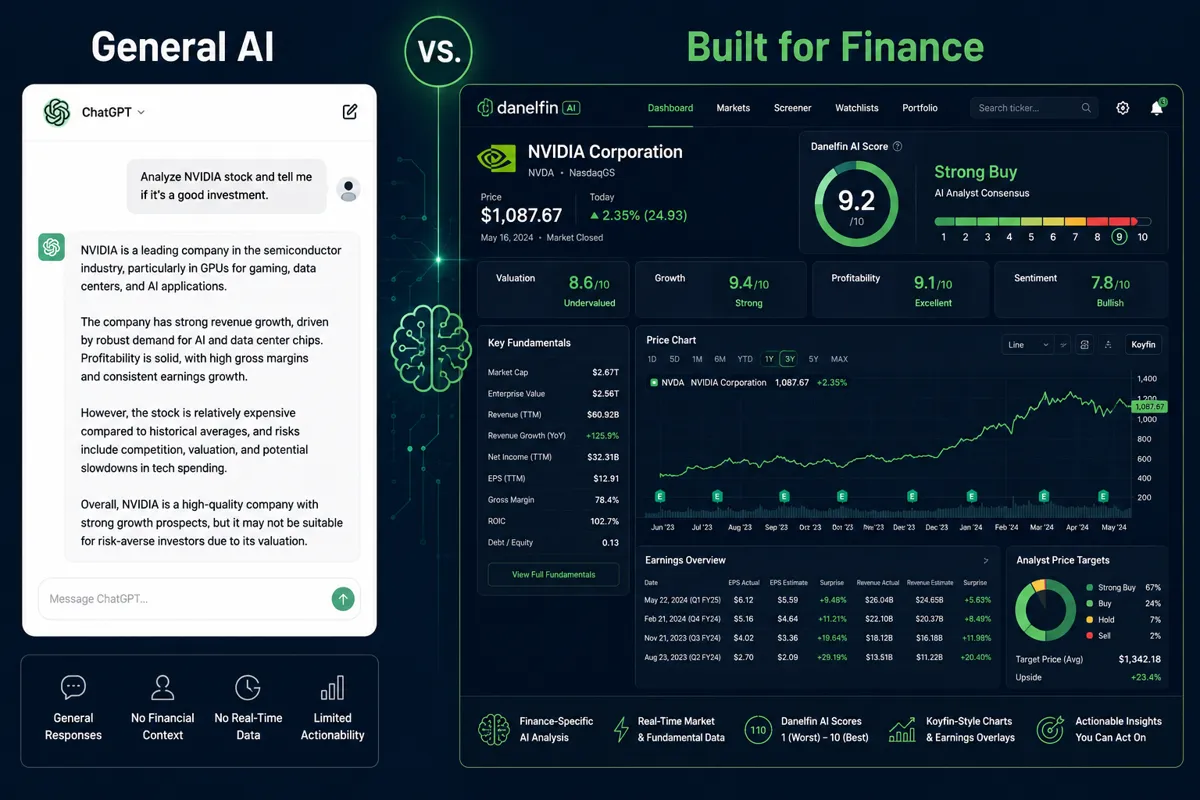
Purpose-built finance AI tools beat ChatGPT for stock analysis on every dimension that matters for actual trading decisions. The comparison isn't even close once you see them side by side.
| Feature | ChatGPT | Purpose-Built Finance AI |
|---|---|---|
| Live stock data | No | Yes |
| Real-time price action | No | Yes |
| AI scoring models | No | Yes (e.g., Danelfin scores) |
| Earnings databases | No (stale) | Yes |
| Position sizing tools | No | Some platforms |
| Financial charting | No | Yes |
| Sector/peer comparison | Limited | Yes |
| Regulatory compliance | No | Built-in |
The tools built for this job have financial data infrastructure behind them. They're connected to exchanges, earnings databases, and in some cases, options flow and institutional filings. ChatGPT is connected to text.
What Are the Best AI Tools for Stock Analysis?
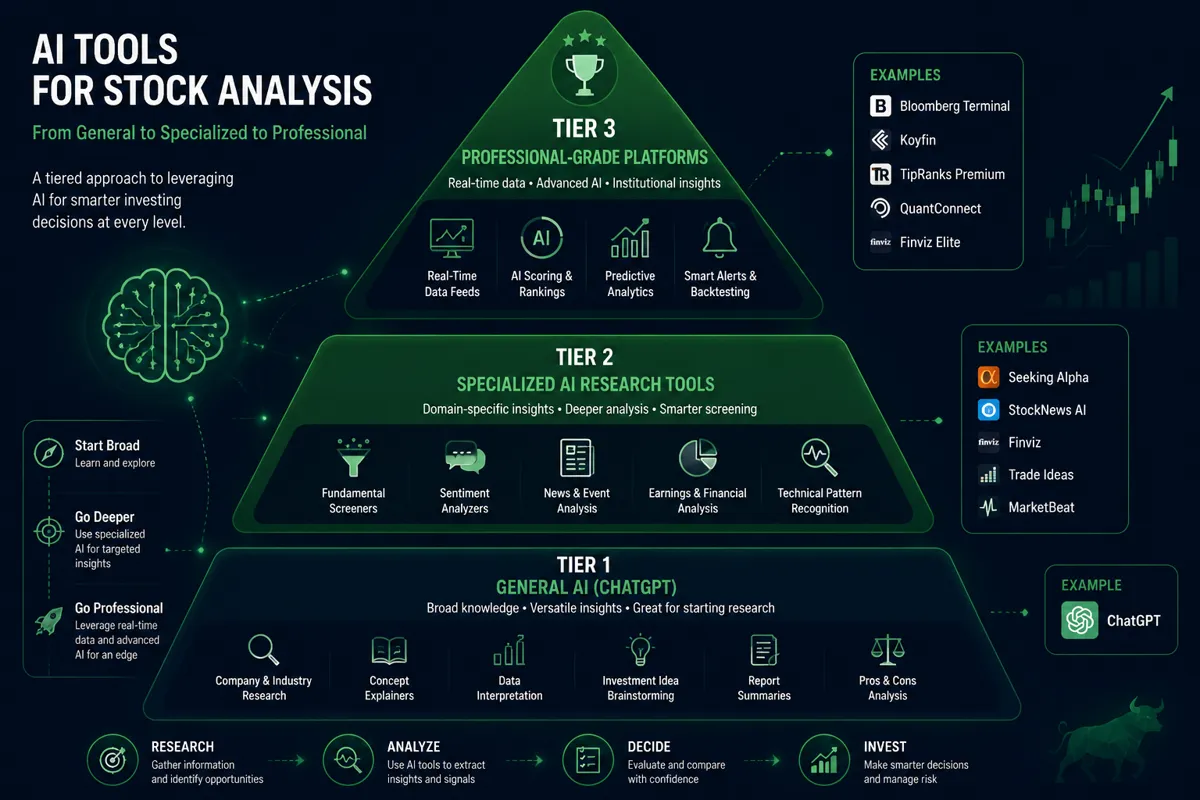
The best AI tools for stock analysis are the ones built specifically for financial data, not adapted from general-purpose language models. Here are three that actually do the job:
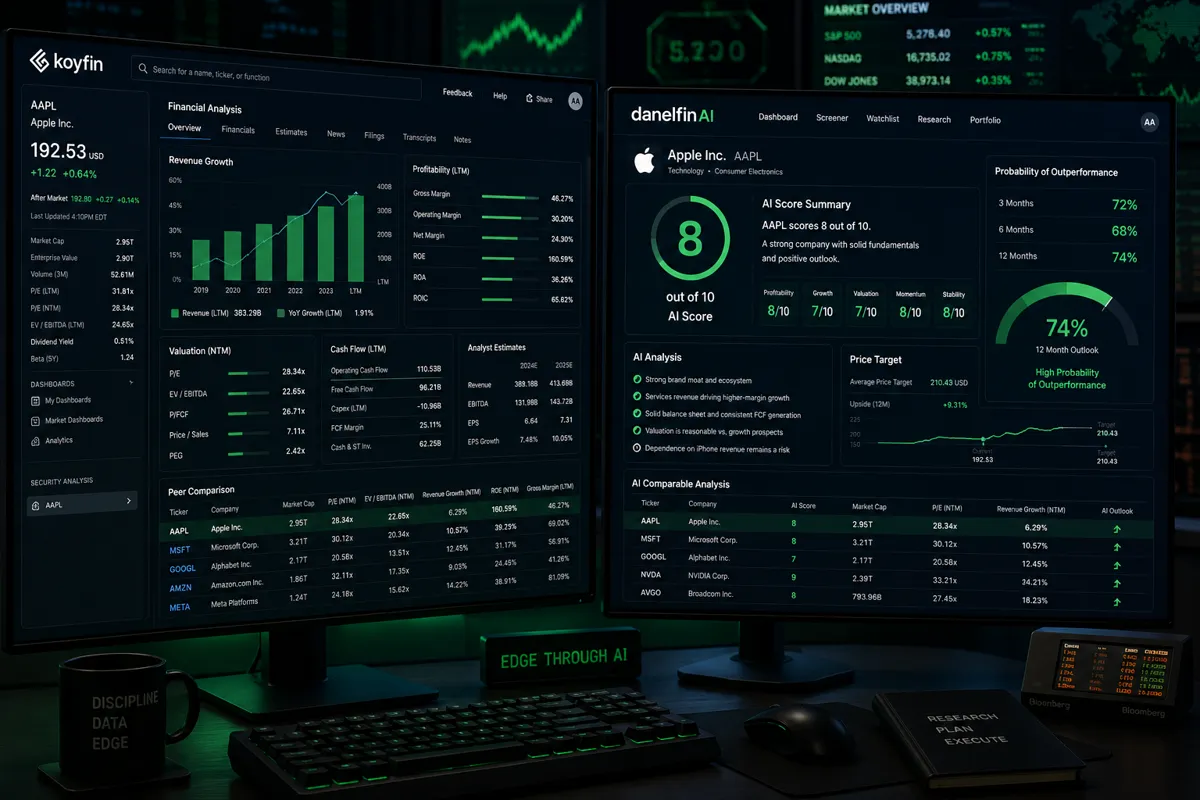
Koyfin is a professional-grade financial data platform that covers fundamentals, charting, earnings estimates, and macro data in one clean interface. It's what Bloomberg terminal users wish Bloomberg looked like. Koyfin analysis lets you run peer comparisons, screen by valuation metrics, and track earnings revisions in real time. It's the tool I wish I'd started with instead of two weeks of ChatGPT prompts.
Danelfin uses AI to score stocks from 1 to 10 based on over 900 financial features, including technical, fundamental, and sentiment signals. Danelfin scores give you a single, actionable number that reflects the probability of a stock outperforming the market over the next 30 days. It's not a crystal ball — no tool is — but it's built on finance-specific data, not general language patterns.
Magnifi is the closest thing to a "conversational ChatGPT for investing" that actually works, because it's trained on financial data and connected to live market information. You can ask it natural language questions about your portfolio and get answers grounded in real numbers.
For day traders and swing traders, Trade Ideas and Tickeron offer AI-driven scanners and pattern recognition built specifically for active trading. For broader research, Seeking Alpha and Morningstar remain gold standards for fundamental research with analyst coverage.
You can compare over 100 of these platforms at AI Stock Picker Apps to find the right fit for your trading style.
What Financial Analysis Tools Do Professional Investors Use?
Professional investors use platforms that connect directly to verified financial data, not general AI. The institutional standard includes Bloomberg Terminal, FactSet, and S&P Capital IQ — platforms that cost thousands per month and are designed for portfolio managers running serious capital.
For retail traders who want professional-grade tools without the institutional price tag, the stack looks like this:
- Koyfin for fundamental data, earnings estimates, and macro overlays
- Danelfin for AI-driven stock scoring and probability signals
- TradingView for charting, price action, and technical setups — see the TradingView breakdown
- Unusual Whales for options flow and institutional positioning — Unusual Whales review
- AlphaSense for earnings call transcripts and document search — AlphaSense review
The pattern here is specialization. Each tool does one thing exceptionally well. That's the opposite of asking a general AI to do everything and hoping it gets it right.
How Accurate Are AI Stock Prediction Tools?
No AI stock prediction tool is consistently accurate enough to trade blindly. Anyone telling you otherwise is selling something. What these tools do well is improve the probability of a good setup, not guarantee outcomes.
Danelfin scores, for example, are based on backtested data showing that stocks with high AI scores have historically outperformed over 30-day windows. That's a probabilistic edge, not a guarantee. The tool gives you better signal. You still need risk management, a stop loss, and a defined exit.
The accuracy question is also the wrong question. The right question is: does this tool give me better information than I'd have without it? For purpose-built finance AI tools, the answer is yes — because they're working from verified, current data. For ChatGPT for stock analysis, the answer is: sometimes, but you can't tell when it's wrong until it's too late.
Discipline beats prediction. The best traders aren't the ones with the most accurate AI. They're the ones with the tightest process.
What Mistakes Do People Make When Using AI for Stock Research?
The most common mistake is treating AI output as a finished answer instead of a starting point. This is especially dangerous with chatgpt for fundamental analysis, where the model sounds confident even when the data is outdated.
Other mistakes that show up constantly:
- Skipping verification. AI gives you a number; you trade on it without checking a live source. That's how you get stopped out on bad data.
- Analysis paralysis from too many tools. Stacking five AI platforms on top of each other creates noise, not signal. Pick two or three, learn them deeply.
- Revenge trading after an AI-suggested setup fails. The setup failed. Don't double down. Cut losers fast.
- Using general AI for time-sensitive decisions. ChatGPT has no concept of "right now." Power hour, gap fills, and earnings reactions are real-time events. Use real-time tools.
- Ignoring position sizing. Even the best AI signal is worthless if you size the position wrong and one bad trade wipes out three good ones.
The fix for most of these is the same: systems over hacks. Build a process, use tools that fit the process, and paper trade it first before putting real money behind it.
How Much Do Professional Stock Analysis AI Tools Cost?
Costs vary widely depending on what you need. Here's a realistic breakdown for 2026:
- Free tiers: Koyfin (limited), TradingView (basic charts), Danelfin (limited scans), free tools at AI Stock Picker Apps
- Entry-level paid ($15-$50/month): TradingView Pro, Danelfin premium, basic Seeking Alpha subscriptions
- Mid-tier ($50-$150/month): Koyfin Pro, Magnifi, AlphaSense lite, Stock Market Guides — Stock Market Guides review
- Professional ($150-$500/month): Trade Ideas, full AlphaSense, institutional-grade screeners
For most retail traders building a swing trading system, a $50-$100/month stack covering charting, fundamental data, and one AI scoring tool is enough. You don't need everything. You need the right things.
Are paid stock analysis tools worth the money? Yes, if you're actively trading and using them consistently. No, if you're buying subscriptions and not building a process around them. The tool doesn't make the trader.
Which AI Stock Tools Are Best for Beginners?
Beginners need tools that are clear, not comprehensive. Complexity is the enemy when you're still learning to read price action and manage risk-reward.
Start here:
- TradingView for charting. The free tier is enough to learn support and resistance, identify the breakout, and track your watchlist.
- Danelfin for AI scoring. The 1-10 score gives beginners a simple signal to research further without drowning in raw data.
- The free Stock Health Scorecard at AI Stock Picker Apps for a quick fundamental check before entering a position.
- The Swing Trade Planner to build entry/exit discipline from day one.
ChatGPT for stock analysis is fine as a learning companion — use it to understand what earnings yield means, or to explain what basing looks like. Just don't use it as your data source for live trades.
What Features Should I Look for in an AI Stock Analysis Platform?
The non-negotiables for any serious AI stock analysis platform:
- Live, verified data. Not cached. Not from a training set. Real-time or near-real-time.
- Fundamental and technical integration. A tool that shows you both the financials and the chart is more useful than one that does only one.
- Clear signal output. Danelfin scores are a good model — one number that synthesizes complexity into something actionable.
- Backtested methodology. Know how the AI model was built. If the platform can't explain its methodology, that's a red flag.
- Risk management features. Position sizing, stop loss suggestions, or at minimum, volatility context.
- Screener functionality. You need to build and refine your watchlist, not just look up individual tickers.
For AI trading platforms that check most of these boxes, the comparison tools at AI Stock Picker Apps are the fastest way to cut through the noise.
FAQ
Can ChatGPT give reliable investment advice?
No. ChatGPT is not a licensed financial advisor and does not have access to live market data. It can explain financial concepts and help structure research, but it cannot provide reliable, current investment advice. Always verify any financial information from ChatGPT against a live, verified source before acting on it.
What are the best chatgpt stock analysis prompts to use?
The most useful prompts treat ChatGPT as a framework builder: "Explain the key metrics I should check before buying a growth stock," or "What are the risks of a company with high revenue growth but negative free cash flow?" Avoid prompts that ask for specific current prices, earnings figures, or buy/sell recommendations.
Is Koyfin better than Bloomberg for retail traders?
For most retail traders, yes. Koyfin analysis covers the fundamentals, charting, and macro data that retail investors actually need, at a fraction of Bloomberg's cost. Bloomberg Terminal is built for institutional workflows that most retail traders don't need.
What are Danelfin scores based on?
Danelfin scores are based on over 900 financial features including technical indicators, fundamental data, and sentiment signals. The AI model assigns a score from 1 to 10 reflecting the probability of a stock outperforming the market over the next 30 days, based on backtested historical patterns.
Can I use ChatGPT for fundamental analysis?
You can use ChatGPT to learn fundamental analysis concepts and build research checklists. You should not use it as a source of current fundamental data — earnings, revenue, margins, and guidance figures may be outdated. Use Koyfin or a similar platform for live fundamentals.
What's the difference between ChatGPT and Magnifi for investing?
ChatGPT is a general-purpose language model with no live financial data connection. Magnifi is trained specifically on financial data and connected to live market information, making it far more reliable for investment-related questions. It's the conversational AI built for the job ChatGPT isn't.
How do I avoid analysis paralysis when using AI tools?
Pick two or three tools maximum, define what each one is for, and commit to using them for 30 days before adding anything new. Signal over noise means fewer tools used well, not more tools used badly.
Should I paper trade before using AI stock tools with real money?
Yes, always. Paper trade it first. Understand how the tool's signals play out in real market conditions before risking capital. No AI tool performs identically in backtests and live trading.
Are free AI stock tools worth using?
Some free tiers are genuinely useful — TradingView's free charts, Danelfin's limited free scans, and the free tools at AI Stock Picker Apps are solid starting points. Free tools work best as entry points to understand a platform before upgrading, not as a permanent professional research stack.
What's the biggest mistake beginners make with AI stock tools?
Treating the AI's output as a final answer instead of a starting point. The tool surfaces a signal. You still need to check the chart, verify the fundamentals, define your stop loss, and size the position correctly. The AI improves your process; it doesn't replace it.
Conclusion
I used ChatGPT for stock analysis for two weeks and learned something genuinely useful: it's a great thinking partner and a terrible data terminal. The distinction matters more than most people realize before they've made a trade on stale information.
The tools built for stock analysis — Koyfin, Danelfin, Magnifi, Trade Ideas, TradingView — exist because financial markets require live, verified, structured data. General AI cannot provide that. Using the wrong tool for the job isn't just inefficient; it's a risk management failure.
Here's what to do this week:
- Stop using ChatGPT as your primary stock data source. Use it for learning concepts and building research frameworks only.
- Pick one purpose-built tool — start with TradingView for charts or Danelfin for AI scoring.
- Run your next five trade ideas through that tool before entering a position.
- Paper trade the first three setups to see how the signals play out before committing real capital.
Cut the noise, keep the alpha. The right tool for the right job is the whole game.
We test the AI stock tools so you don't waste months on the wrong ones. Browse the full breakdowns at aistockpickerapps.com.